Dr Fulminare Bandijcat Noctule Bat

sidekickbooks

Showing posts with label poetry. Show all posts

Thursday, 21 July 2016

FINDERS KEEPERS emerges from the forest!


Finders Keepers by Harry Man and Sophie Gainsley is out now! A poetic field guide to Britain's vanishing wildlife, its poems and colour illustrations turn the spotlight on foxes, salmon, butterflies, bats and more.

The authors are also geocaching the poems in various locations around the country. Follow @keeperfinder on Twitter or visit finderskeepers.org to keep up to date with the latest information.


Friday, 12 February 2016

Poets Can't Do Anything Right. And Maybe That's Their Own Fault.


In one of the many memorable exchanges in the BBC's I, Claudius, a grovelling senator congratulates John Hurt’s Caligula for chewing out his colleagues. “How right you were, Jove,” he says, “to think of punishing them for celebrating the Battle of Actium.” “Well you see, Marcus, I had them both ways,” Caligula replies. “Because if they hadn’t, they would have insulted the God Augustus, my grandfather who won the battle.”

Caligula’s little stitch-up came to mind when I first read Private Eye’s coverage of Sarah Howe’s victory at the Eliots. In the past, the same organ has criticised the awards – with good reason, I think – for apparent nepotism. Only last year, it wondered at winner David Harsent’s relationship with some of the judges, while here is a typically scathing round-up of poetry awards culture in general from 2002:

This year's judges [for the Forward Prize] include two poets published by Picador (Sean O'Brien and Michael Donaghy), who have shortlisted two other Picador poets (Peter Porter and Paul Farley) for the £10,000 top prize. Last year's judging panel also included two Picador poets - Donaghy (again) and Peter Porter. Last year Porter gave the main prize to Sean O'Brien. [...]

Last year the £5,000 prize for "best first collection" went to another Picador poet, John Stammers (a product of Donaghy's poetry workshops), and the £1,000 “best single poem“ prize was given to Ian Duhig for a poem - you guessed it - from his forthcoming Picador collection. The same poem earlier won Duhig the £5,000 top prize in the Poetry Society's national poetry competition, judged by a three-man panel including his mate Don Paterson, the foul-mouthed Scottish bard who also happens to be the poetry editor at, er, Picador.

This year's five-poet Forward shortlist includes two other chums, David Harsent and John Fuller (winner of the Forward prize in 1996, when one of the judges was again Sean O'Brien). And Sean O'Brazen was one of three judges of the 1997 T. S. Eliot prize (worth £5,000), which was awarded to ... his own editor, Don Paterson.

Duhig, Donaghy, O'Brien, Harsent and Paterson all have the same agent, TriplePa, aka Gerry Wardle - who just happens to be Sean O'Brien's partner. And Donaghy, Duhig, Farley, Fuller, Harsent, Paterson and Porter have all received fulsome write-ups from the Sunday Times's main poetry critic, one Sean O'Brien.

This year, however, the Eliot went to a young poet with no obvious connection to the presiding fraternity – or at least none that Private Eye could root out. Turning their own reasoning on its head, this in itself became a cause for suspicion and sneering cynicism. How could a poet not previously feted suddenly win the most prestigious award on the circuit? Something must be up, was the upshot. The Eliot judges, it seems, are damned if they do and damned if they don’t.

Of course, sneering is Private Eye’s self-appointed duty. Jonathan Miller, the target of their merciless lampooning for years, once asked of them: “What are you for?” The answer is: nothing. Private Eye subsists on the presumption – all too rarely inaccurate – that there is shadiness and shamefulness behind everything that filters through to the public consciousness.

Sneering is also a Great British pastime. But there is an unwritten (or possibly written, or at least documented) rule that as long as it is directed at the powerful and pre-eminent, it serves a moral or culturally useful purpose, but when it is directed at soft targets it is contemptible. And poetry is surely the softest of all targets. Softer even, I would venture, than women and minorities, since we live in an era when the liberal backlash against overt sexism, racism or homophobia is often vicious and swift. I hope that comparison isn’t too glib – needless to say, contempt toward women and minorities has much more serious repercussions and should accordingly be treated more seriously. I only point out that poetry is the easier target for sneering because it has very few vigilant defenders. The kind of person who feels they are oppressively policed, censored and intimidated by social justice hit squads can freely practice their impression of serene imperiousness by snorting in the general direction of practising poets.

What is particularly galling about the kind of sneering that is directed at poetry is that, as so aptly demonstrated by Private Eye, it is adaptable to all possibilities. No conceivable form of poetry can escape it. If the language a poet employs is complex, they must be obfuscating pretentiously. If it is simple, then surely anyone could do it. Poets who write for the page are timid and old-fashioned. Poets who write for the stage are failed stand-ups. Poets who are subtle in their political engagement are toothless. Poets who are less subtle are ranting lefties. Traditional forms are dull. Innovative forms are gimmicky. Poetry should be ‘authentic’, not clever, but nobody wants to hear you talk about your feelings all night. And so on.

Now and then, a voice in the electronic wilderness implores poetry to rejuvenate itself, to prove its detractors wrong. But what can be done that isn’t already being done? Countless poets have tried being young and sexy. Countless have tried being old and wise. Many are poor. Many are wealthy and glamorous. Many write from experience, many delve into the fantastical. Most, I think, have ‘something to say’. Poets double up as their own underground promoters and presentable ambassadors, reach out to other artforms, collaborate, eviscerate, tend, trend, jump through hoops and pointedly refuse to jump through hoops. They work for free and they take the work they can get. But nothing can impress the practised cynic with his lovingly cultivated pitying frown.

What is perhaps worse is that, as Paxman might say, poets themselves have conspired in the development of this supremely effective cynicism. Poets, I suspect, are the originators of most or all of the most sweepingly dismissive criticisms levelled against them. Praise, in the poetry culture I consider myself a part of, is visible and plentiful, but it is also stultifyingly dutiful and functional. The lexicon of judges’ reports and favourable reviews enjoys considerable overlap with that of the advertising industry. It is depressingly uncreative. The negativity, on the other hand, is born out of natural passions relentlessly seeking new forms of expression. It is mischievous, sly, funny, pointed and frequently insightful. Because poetry works like a spell, and a spell is easily broken, such negativity is also very potent, and perhaps for this reason, it is kept mostly at a low whisper, drowned in a sea of perfunctory praise. But because it is so potent – a potency also derived from its honesty – it also, I think, seeps into the cultural atmosphere more readily than praise, which is willed and hence weak.

I’m basing this both on direct experience (with particular regard to the words I hear coming out of my own mouth) and on second-hand tales of what judges and editors say to each other at after-parties. And here I mean praise as distinct from congratulations, encouragement and comradely enthusiasm. These are sincere and in abundance. Perhaps too much in abundance – they are relied on, arguably, to fill the hole left by an absence of meaningful praise. The sorry state of the awards system documented in the quote above looks an awful lot like the pre-social media equivalent of coordinated ‘likes’, ‘shares’ and retweets as enacted by men in positions of influence. The problem with congratulations, encouragement and comradely enthusiasm is that they centre on the individual, not the work, and so we have a country full of garlanded poets whose faces and book covers are fetishised over anything they have written, while the writing itself is lazily trashed.

I am, of course, talking at a high level of generality. One of the reasons I value the reviews of The Judge on the Sidekick site is that while he is frequently scathing and sometimes ungenerous, his positive remarks seem to come from the same place as his negative ones, and so seem to me to be more effusive and meaningful than the average artfully worded fluff piece. When I lived briefly with Roddy Lumsden, my one-time editor at Salt, I found his passion for certain poems and books completely spontaneous, genuine and unflagging, even if he could never really articulate to my satisfaction what it was he liked about them. I could give more examples of exceptions, but I’ll stop there.

There are two lessons I draw from these observations. Firstly, as I’ve argued before and as has indeed been said elsewhere, there ought to be an ongoing effort toward a robust, flexible and playful language of positive criticism within poetry, so that sincere praise has many more channels through which to flow. The pool has been stagnant for a long time and is only lately being reinvigorated.

Secondly, I think that negative criticism needs to step out of the shadows, in part so that it can inspire spirited defence. It’s notable that Oliver Thring’s bored swipes at Sarah Howe’s poetry in The Sunday Times brought out more in the way of a passionate account of her work than anything that had been written to date. Don’t get me wrong – I’m very sceptical about the merits of a tough love approach. But at the moment, let’s face it, poets are not preparing each other for a life above the parapets. The good-hearted mutual encouragement and flattery needs to be backed up with critical weaponry, and you can only really forge this weaponry in the heat of critical disdain. But once it’s disseminated, one would hope it will be considerably harder for armchair emperors to feel they can make their mocking jabs without inviting withering responses. Which in turn may well greatly improve the quality of the mockery.

Thursday, 15 October 2015

Birdbook: Farmland, Heathland, Mountain, Moorland - Out Now


Our last release of 2015 is Birdbook: Farmland, Heathland, Mountain, Moorland, an anthology of newly commissioned poems and illustrations concerning an array of British birds, from corvids to game birds via hawks and owls.

We're also doing a special offer: you can buy both this release and its prequel, 2012's Birdbook: Freshwater Habitats, for £15 plus postage. That's over 100 new poems and illustrations by a heaving raft, or dazzling array, or splendid constellation of poets and illustrators. Even just listing the poets, there's Rachael Allen, Emily Berry, Liz Berry, David Morley, Vidyan Ravinthiran, Ira Lightman, W. N. Herbert, Gerry Cambridge, Claire Trevien, Chrissy Williams, John McCullough, Moniza Alvi, Sarah Hesketh, Peter Daniels, Vahni Capildeo, Lorraine Mariner, Christopher Reid, Antony Rowland, Hannah Lowe ... I could go on.

Friday, 9 October 2015

HELL. CREEK. ANTHOLOGY. The book and the York launch.


If you separate out the words of the title, it sounds just like the thump and rumble of an approaching theropod. HELL. CREEK. ANTHOLOGY. Run for cover!

Hell Creek, our latest team-up book, is out today and can be bought from us directly. Poet J.T. Welsch and illustrator Dom & Ink have teamed up to deliver a winning pastiche of Edgar Lee Masters' famous Spoon River Anthology, replacing the townsfolk with dinosaurs from real life Hell Creek, Montana.

The first launch reading for the book will be taking place this coming Monday, 12 October, from 7pm at the De Gray Lecture Theatre at York St John University. It's a double launch with Naomi Booth's The Lost Art of Sinking and is free, but ticketed. Further details here.

Friday, 2 May 2014

26 Characters: Cry havoc and unleash the badgers and witches!

I've been thrilled to be part of the latest collaborative venture between writers' collective 26 and the Oxford Story Museum, called 26 Characters. For this fantastic exhibition, the museum asked famous authors to choose their favourite character from children's literature and pose for a portrait dressed as that figure.

As a teaser, see if you can identify this well-loved writer getting all wicked and westerly:


For our part, we writers were each given a letter of the alphabet and asked to write a sestude (a 62-word poem) beginning with this letter, about one of the photos in the museum.

This project combined three of my favourite things in the world: children's literature, poetry and dressing up. How could I resist? I was given the fantastic illustrator Ted Dewan, who posed with his daughter Pandora as Pod and Arrietty, from Mary Norton's The Borrowers. They also gave me the letter X to begin my poem with, the rogues, but I managed to find a way to get it in there.

We were also asked to pose as our own favourite children's character, and I too was a witch. The Worst Witch, aka Mildred Hubble. Here I am after yet another failed potion class, and you can read about my love for this character on the museum blog here:


The exhibition has been featured in Design Week and the Huffington Post, and is on at the museum until 2nd November 2014. For more information on this and other amazing exhibits, see the Oxford Story Museum's website.

A wonderful way for children to discover books, and adults to remember why they fell in love with reading in the first place.

Friday, 18 October 2013

Launching Angela


So the 16th October was the actress Angela Lansbury's 88th birthday, and the day we launched Chrissy Williams' and Howard Hardiman's Angela into the world. The party was at Drink, Shop & Do near King's Cross. There was cake, games, much donning of Angela masks, and your correspondent sampled a Smouldering Cherry cocktail in celebration of the book's debt to Twin Peaks. 


If you weren't there and you haven't picked up a copy yet, Angela is in part a poetic and visual tribute to Lansbury, in particular her role as Jessica Fletcher in Murder She Wrote, but also a Lynchean descent into the otherworldly realm between our world and the world of detective fiction. It's very dark and very funny, and lovingly illustrated in the starkest of colours. It also might freak you the hell out, so we'd recommend reading in daylight, among friends.


Chrissy Williams has also just been shortlisted for a Michael Marks Award for her previous pamphlet, Flying Into the Bear, and she has several typically unique poems in our just-around-the-corner mega-anthology Coin Opera 2: Fulminare's Revenge. In fact, since we finished putting that book together, the various contributors can't seem to stop winning prizes and getting put onto shortlists. That's a good sign, eh?

And yes, that is a madeira cake above with a knife stuck into it, bleeding copious amounts of jam. That's the kind of party we throw.


Friday, 28 June 2013

Poetry Guest-Appearing in Games #3: Trine 2


Trine 2 is a delightful co-op puzzle platformer which will burn out your PC's heart with its gorgeousness. The plot makes a little more sense in single-player (the Trine itself is a device used to explain why the player can switch between three characters) but it comes into its own when played with two friends. The Knight holds off the goblins with sword and shield while the Wizard alchemises an unstable bridge out of thin air and the Thief lights the way with flaming arrows. Something like that.

The poems in Trine 2 are written on secret scrolls hidden in various places throughout the span of the game, much like in Mark of the Ninja. And like in Mark of the Ninja, they form a complete narrative when pieced together, gradually revealing the history of the game's antagonist. Because it's set in a fantasy land ablaze with colour and sunlight, however, the narration is somewhat more direct, the style of telling sharply reminiscent of children's fairy tales. The first ten are all simple quatrains with an ABCB rhyme-scheme. Cleverly, they use repetition to telegraph the conceit of alternating narrators: two sisters taking it in turn to speak about their relationship, each with a different outlook. There's little in the way of subtle metaphor, but that's fine – they fulfil their intended purpose of innocently leading the reader down an ever-darkening path.

The writer's grasp of meter does slip a little, unfortunately, as in the last two lines of the sixth piece:

My sister is silly,
Insipid and dim.
Yet everyone still loves
This golden girl prim.

It's another case, I feel, where even waving it under the nose of a poet would have resulted in a superior edit.

The last two poems in the game are longer. The sisters are finally named and Isabel gets a song, Rosabel a lament. 'Isabel's Song' is the better piece:


The ABBA rhyme-scheme is refreshing in this context, and there's just enough variation in the rhythm for this to feel like a 'song of innocence' in the style of Blake, even if it's rather clichéd. The fourth line being one less metrical foot long is surprisingly effective. If it only it were repeated in the eighth!

'Rosabel's Lament' is hamstrung by at least two absolutely clattering lines: "And grief and pain are my hopes" and "My failures ever let me mourn". "Failures, may I mourn?" "Yes, you ever may!" "Oh thanx." Maybe there's something deliberate in the way the sinister nursery rhyme has segued into bad teen angst poetry as the sisters have grown up.

You can read all the poems here, although in this case in particular, I would recommend discovering them through playing the game. More so than in the two previous examples in this series, I would say the effect of the poems is enhanced by their gradual accumulation while the 'present day' plot unfolds. It's a very effective form of narrative parallelism that feels less forced than threading flashback sequences through a story, as is often done in television drama. The fact that the saga of the sisters is told through poetry is an important factor; their story at once has the chime of legend and the tangibility of a recovered artefact, since it's presented on weathered parchment. It leaves the reader in a position where they can make their own mind up about its significance.

Wednesday, 26 June 2013

Fads and Aftershocks: what can poetry and gaming do for one another?


Open mic poetry night in Grim Fandango

This article asks, and attempts to answer, three questions:

1. What can poetry do for gaming?

Electronic gaming culture is expansive and continues to expand, with indie development in particular burgeoning at a phenomenal rate. It's become almost an umbrella term, in that it covers everything from teenagers playing mass-marketed war simulators with film-quality CGI to commuters idly thumbing through Temple Run on the train to work, to the activist inclinations of the interactive fiction community. Many game-making tools are now freely available on the Internet, and it seems as if every few months a new lone gunman developer surfaces with a breakout hit, earning him enough to quit his job.

But the conversation around gaming comes back repeatedly to its legitimacy as an artform, with gamers frequently expressing their desire for the best games to be 'recognised' as works of art. What is missed in the deployment of the term 'recognition' is the fact that the behaviour of the audience is an immeasurably large part of what defines a practice as an art, and the principle obstacle to games being recognised as art is gamers. I don't mean that pejoratively, but as long as the bulk of the audience for games continue to express themselves mostly through financial behaviour – buying, then exhausting the product before moving on to the next purchase – gaming will struggle not to be regarded as a form of disposable entertainment. Shakespeare is not held aloft as an artistic genius because hundreds of Elizabethans and Jacobeans flocked to see his plays night after night; his esteem has been managed and sustained by generation after generation of writers and scholars who have provided intelligent assessment and insight into his work and used it as the foundation for creative works of their own.

There is no sense, therefore, in waiting around for 'recognition', or indeed for waiting for the Shakespeare of the game development world. How we act and think now will change how other people think about games, and aside from financial behaviour, the vast majority of discourse is journalistic in character. I have read many, many insightful articles about games, but journalistic copy is written to be succeeded the next day by something else – it is incredibly impermanent. Games studies courses are beginning to find a foothold in academia, but academia is, by its nature, secluded and self-insulating. I don't want to diminish the importance of either of these areas, but there needs to be as much variety in writing about games as there is in games themselves. (I would go further and suggest that the cause of gaming as art has a serious problem when the most vexed and visible conversation of recent months has been a pitched battle between affluent consumers and corporate spokespeople.)

1997's Snake, now a thing of nostalgia, is revisited by Cliff Hammett in Coin Opera 2

For games and gaming to be acknowledged and discussed in poetry – in the work, that is, of writers who are, first and foremost, poets – is an important step in the way gaming is written about. It's not quite the same thing as blending poetry into games or making poems more like games, though I'm an advocate of those as well. It's also not simply a case of putting a badge on games, saying, "You have been deemed worthy." Poetry has that reputation of being lofty, but has also, of course, had a sideline in reconstituting detritus into art for the better part of century, so to be plundered for poetic content is not necessarily an honouring process.

No; the importance of poetry about games, as with poetry about anything, is that it suggests new ways of considering the subject, new ways of 'reading' games beyond the purely evaluative. It's a creative-critical approach. I've been proffering examples from Coin Opera 2 to people for some time now, so here's just a couple more: Cliff Hammett's 'Snake' works as a reading of the once-popular mobile game Snake as a visual metaphor for the movement of water across the fissures in man-made structures. It suggests this both through its words and through its shape, and might cause us to return to the original game (now long since superseded as casual entertainment by Angry Birds and its sequels) and find something new and remarkable about it. Prompting the return is important; individual games may sell millions and enjoy a brief period in the public consciousness, but if any are to rise above the level of a fad, we need to find reasons to return to them once newer ones with better graphics supplant them.

My second example is Dan Simpson's 'Sympathy for the Orange Ghost', an extract from a full-length show he's taking to the Edinburgh festival this year. Pacman is already legendary, the main character already an icon. The game has gone about as far as games can go in embedding itself in our culture. Notably, it has already had a starring role in a one-man poetry performance show: Ross Sutherland's The Three Stigmata of Pacman. But Dan's work enriches Pacman further by unearthing a further implied narrative in it: the outcast status of Clyde, the orange ghost, whom he lyricises into a symbol of social marginalisation in general.

Poetry about games extends their life and extends their relevance. It is, in itself, a form of the 'recognition' that some gamers crave, but operates through an active creative engagement. This is what poetry can do for games.

Ross Sutherland performing The Three Stigmata of Pacman


2. What can gaming do for poetry?

At first blush, the answer seems obvious. In commercial terms, poetry is a dust mite to the gaming industry's behemoth. In fact, poetry barely even registers as an industry at all, and therefore by infiltrating the culture of gaming, poets might be seen as making some calculated grab at the larger audience.

But it's a mistake to think in these terms. Poetry is a much wider, older and potentially longer-lasting cultural discipline than gaming, and while it might look sickly in terms of revenue, its health in terms of the number and variety of its practitioners is booming. Money troubles may slow it down, greatly reduce its reach and hurt individual poets and publishers, but poetry will go on in some form, while the unsustainability of Western opulence may still spell an early end for gaming (in its electronic form at least).

What's more, poetry's lack of commerciality is in large part down to its effectiveness. That is to say, a little goes a very long way. Consumers burn through games, novels and even sprawling television sagas in days and find themselves hungry for more, while a small amount of poetry is enough for most people for most of their lives. Contemporary poets struggle for attention not through lack of skill or personality, but because poets of past eras successfully remain instilled in the national psyche, nourishing our cultural discourse far beyond their lifespan. We have an excess of good poetry, and in this sense, one sensible argument is that poetry requires nothing, that it is already the survival specialist of the arts, able to live on water and thin air if need be, growing fat in times of plenty or austerity.

What poetry does crave is renewal. Without renewal, entire generations risk coming across as nothing more than an aftershock of those that came before. Renewal is the sign that poets are in step with the present and prepared to attend to it, rising to the challenge of being the world's 'unacknowledged legislators', rather than wallowing in nostalgia or trying to relive past glories.

Gaming provides an obvious opportunity for such renewal. I don't suggest, of course, that all serious poets should at once turn to games in order to demonstrate an affinity with modern life. Done cynically, this leads to cheap and embarrassing poems (see Wendy Cope's attempts at text message poetry). But we're now living in a world where younger people are reading more from computer screens than they are from printed material, and part of the reason for this is the richness of virtual environments, where identity is more fluid and the ways of absorbing information more varied. The opportunities for philosophical and artistic exploration are immense. Thinking, for instance, of identity – a huge preoccupation in contemporary poetry – poets should be interested in the implications of being able to come home from work and role-play as a humanoid plant who can summon the dead until bedtime. Since experience is subjective, is there any reason to believe experiences in virtual environments are less real, less a part of our make-up and a contributing factor to our character, than experiences in the concrete world? Consider this particularly in the light of the increasing amount of social interaction within online communities.

What about how virtual architecture can inform form and rhythm? It's no coincidence, I would say, that a good number of the poems we took for Coin Opera 2 chose to use shape, space or meter as a way of expressing their engagement with a game. And because the history of game narratives is one of constant, rapid evolution and faltering experiments, often with the reins of authorial control loosened in order to accommodate player interaction, they are, I would suggest, a treasure trove of myth, where 'myth' means the opportunity to take elements of a known tale and retell or reinterpret them to explore wider themes.

Games are abundant, often scrambled packages of meaning waiting to be untangled and made sense of. Gaming culture is a cluster of new experiences whose careful evaluation, in any literary form, will help us all make sense of ourselves. That's what gaming can do for poetry.


3. What else can they do for each other?

Finally, there's the importance of cross-disciplinary discourse, which I also allude to in my Dr Fulminare interview over at Sabotage. At present, as far as I can make out, there is very little discussion between gaming and literary audiences, much within the bubble of each. Meanwhile, there are multiple issues afflicting both literary and gaming culture wherein both could benefit from sharing their ideas. One example is the problem of gender bias, which I go into more thoroughly here.

There are numerous social and political problems all of us are grappling with in some form or another. There are arguments that poetry can be a constructive force in this respect, and there are arguments that games can be a constructive force in this respect. I believe these arguments, but if they're right, then both cultures – and both disciplines – could stand to share their ideas a little more freely.

Thursday, 20 June 2013

Poetry Guest-Appearing in Games #2: Dishonored


Like Mark of the Ninja, 2012's Dishonored is an action-stealth game and a shining example of that genre. It's also credited with introducing gamers to one of the most memorable fantasy worlds of recent times: the plague-ravaged fishing city of Dunwall, a kind of steampunk Victorian East London powered by whalefat batteries (the whales are implied to be Godzillarish mutants with connections to another dimension). Automatic gun turrets and electric 'walls of light' exist alongside flintlock pistols and duelling sabres, as the protagonist, Corvo, traverses titanic iron bridges and vast stone fortresses to revenge himself against the corrupt ruling classes.

Taking a design cue from Bioshock, also set in a city gone wrong, the lore of the world is revealed to the player mostly through notes and books he or she finds scattered about the place, often near decaying corpses. Reading them is entirely optional and has little bearing on the plot; they're there to add flavour to the world, to make it feel inhabited by more than the main characters and a legion of disposable guardsmen. And wouldn't you know it: out of all the various material I found, two were definitely poems.

The first, found in the second level of the game near a homeless plague victim, is the stronger of the two. It's called 'Death in the Month of Songs', with a notation explaining that it's both an excerpt from longer work and a translation (from 'old Serkonan', if you were wondering). This is a clever move by the writer, as it provides an explanation for the poem lacking the sense of an ending, and also excuses a little of the tinniness, since translations tend to be difficult beasts. That said, it does read like an honest attempt at a decent poem. It consists of four stanzas of three lines, with an implied narrative and use of repetition in the first lines of each: "She was shy in the Month of Hearths" through to "She was dying in the Month of Songs". It apes the style of the romantics somewhat, and has the odd moment of interesting imagery:

She was wed in the Month of Clans
To her sailor cousin from Cullero
A shrill bird, drilling at my chest

The last line, though, is pretty poor: "A terrible kiss on her distant lips". 'Terrible kiss' has that try-hard vibe about it, and the internal rhyme is heavy-handed. She's dying from a disease at this point, but why are her lips distant? Distant, perhaps, from the narrator, who is her suitor but who ultimately loses her to the cousin. In fact, I have to hand it to the poem: it does manage to tell a tragic story with very few words. The lady in question marries a sailor instead of the narrator, who loves her, because she has a head for adventure. A cruelly short time later, she dies from a tropical illness.

The second poem is depressingly bad. It purports to be an excerpt from 'a set of cautionary tales for children' and is obviously intended as a sort of macabre nursery rhyme or folk ballad:


Here's the thing about rhymes and ballads though: they tend to scan. The rhythm is such that the lines roll off the tongue. Here we start with:

They say that Jimmy Whitcomb Riley
Was a brawler his mates called Smiley.
He ran around, up and down-town,
Pulling off every kind of crime-y.

Which is all kinds of awkward. And what's the point of forcing a rhyme with the ending 'y' if it's not even a full rhyme? Two stanzas later, we get 'a-sleeping' rhymed with 'Clavering'. This is as lazy as it gets. On top of that, the rhyming pattern established in the first stanza, which is basically a variation on a limerick, is abandoned in the second through to fourth, presumably because it was too difficult to find more than one rhyme for 'boys' or 'day'.

But the worst thing about this effort is that there's no real story. If you're going to half-arse the poetry for the sake of telling a 'cautionary tale', you should at least have a tale in mind. This one starts off describing a typical no-good character. Then, in stanza four, he wakes up as a fish! That's it! Even McGonagall had something he actually wanted to tell us about.

Someone on the Dishonored writing team obviously decided that inserting poetry into the game through these books and documents would help give the world credibility. It's one of those little details that makes an imaginary people seem real. Indeed, ever since Tolkien, it seems to be an unwritten rule that every fantasy world must have its ballads, tavern songs and poems as a sign of the richness of its culture. This makes sense. But it also leaves you wondering: why, then, don't games developers hire a poet to write them their poems? Poets tend to come very cheap, and many would embrace the challenge of writing in whatever style you wanted.

I suppose the answer is that for all that the 'idea' of poetry still holds sway, the average person's familiarity with it is so lacking that they can mistake an awful, rushed attempt for a convincing approximation.

Saturday, 15 June 2013

Gender / Gaming / Literature


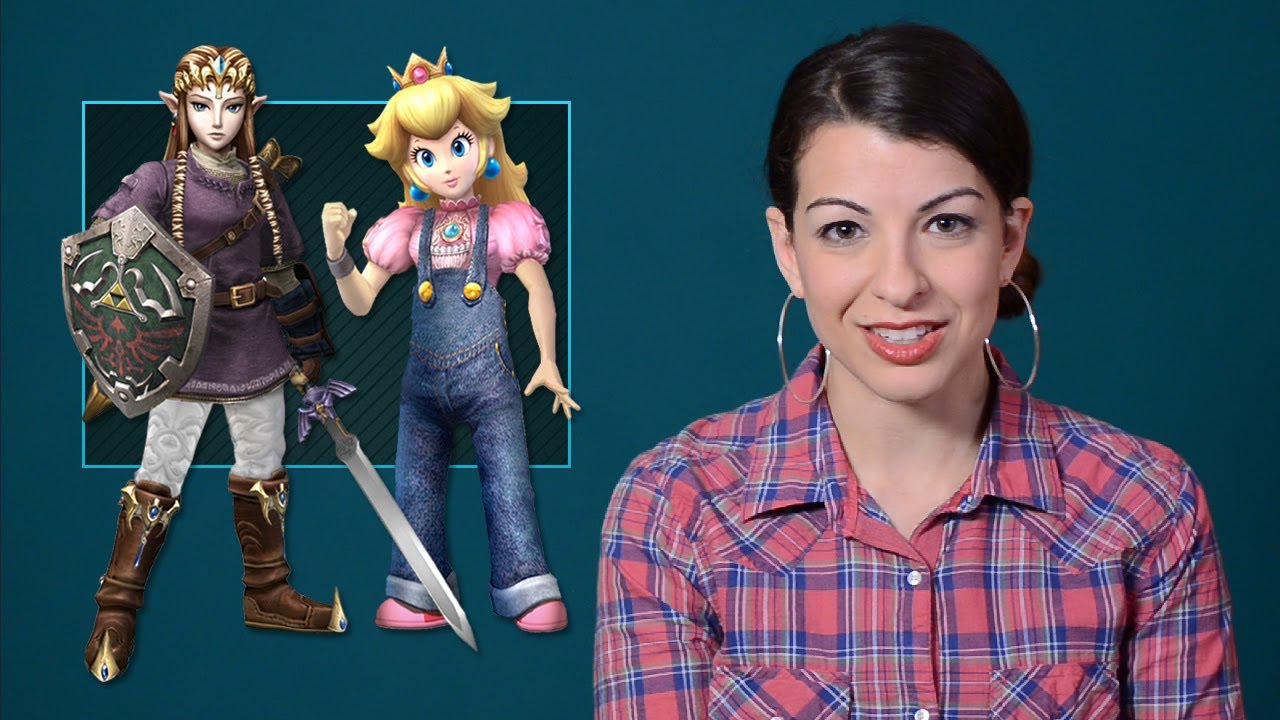
That there is a major issue with gender representation within both gaming and literary culture is now so widely accepted that it's easy to forget the claim is even contested. But contested it is; the worst that can be said about Anita Sarkeesian's Tropes vs Women series so far is that it's a succession of statements of the obvious, but that hasn't prevented a wave of antipathy and attempts to discredit Sarkeesian, even to the point of publicly accusing her of fraud for asking for too much money from her supporters.(1)

Even if we ignore this resistance to eminently sensible criticisms, just because a problem is widely acknowledged doesn't mean it shouldn't be discussed. One argument deployed when feminist critics like Sarkeesian emerge, or when statistics are released that point to comparable problems in literary culture, is that we're only seeing a reflection of wider problems with equality in society. Games developers cannot employ more women if women aren't applying for the jobs and female authors can't be published if they aren't submitting work. Similarly, if there is a lack of female protagonists, characters and perspectives in games and literature, it's because the public aren't interested enough in them.

Firstly, it should be pointed out that this is a case of neutrality as complicity. The metaphor of the travelator(2) is useful in characterising what's happening. There is a cultural drift towards inequality – not just to the detriment of women, but to the detriment of minority ethnic groups, the poor, gay people, transsexuals, the disabled and others. We can debate about who is responsible for that cultural drift and whether or not it's part of human nature; what's important for now is to understand that if you aren't resisting – if you aren't walking in the opposite direction along the travelator – then you're being pulled towards accepting greater and greater inequality, into a position where you're more likely to find basic notions of freedom and fairness unrealistic or fanciful. The most common complaint against feminists is that they're too visible, too attention-seeking, too forceful. This complaint ignores cultural drift and the fact that you can't create a countercurrent without considerable noise and activity, nor without making demands.

Secondly, literature and gaming in particular should be at the forefront of positive change. Games are spaces where we can play. Books are spaces where we can exercise our imaginations. Creative mediums are where we can take stock of what is unhealthy in our world by imagining a better one, where we can test outlandish theories, and explore our most dangerous instincts in a safe environment. They're where we can visualise and articulate internal conflict. In short, they're areas where notions of what is realistically achievable in society should give way to idealism and social experimentation, where everything we think we know should be regularly turned on its head. This already happens; it just needs to happen more.

More importantly, they're areas where change can occur relatively rapidly because of their accessibility. In most industries, systemic prejudice is so ingrained, so threaded into the system that change is generational at best. Women don't land corporate jobs, often, because they lack the requisite aggression and competitive edge. They lack aggression and a competitive edge because these are qualities that, early on in children's development, are identified as masculine, as unfeminine. In other areas, women lack qualification or experience or self-assurance, all because they are undermined at an early point in their lives and placed at a disadvantage. But you don't need to land a job to become a writer. And with game creation tools like Twine and Construct 2 constantly evolving, you don't need a job in technology to become a game developer. Best of all, the Internet provides the necessary tools for disseminating the resulting work and building an audience for female critics and creators alike.

Twine is a simple, window-based development platform for text adventures.

So what needs to be done?

One of the most important things to challenge in both literature and gaming is the idea of a type of book or game that is aimed at women, and the accompanying notion that addressing the gender imbalance will mean more of these types of games and books, at the expense of the type that we (men) typically enjoy. The scare story is that political correctness demands an overall reduction in quality.

But these are industries/environments where the full spectrum of what appeals to boys and men has been heavily explored and is collectively well understood, while women's tastes are very poorly understood, in part due to a deficit of widely disseminated critical writing by women. The kind of games and books that are marketed to girls and women – chick-lit and dolls' house games – are the result of this poor understanding. That's not to say women don't like these games and books, but that it represents only a tiny part of the full spectrum of what they might like – a spectrum which, in all likelihood, overlaps to a massive degree with men's tastes.

If women's tastes were more thoroughly explored and understood, what I suspect would come to light is that a multiplicity of minor changes would do much to bring more women on board while sacrificing little of what appeals to male audiences. To take an example from gaming, one of the reasons women can feel excluded by the content of a game is the proliferation of female characters whose sole purpose appears to be titillation. This is frequently misunderstood as an objection to partial nudity or attractiveness, when in fact it's a complaint about deficit of personality and relatable goals. It would be easily resolved by introducing female characters who fill out a much wider range of roles, as well as genuinely sexy male characters. It does not necessitate censorship.

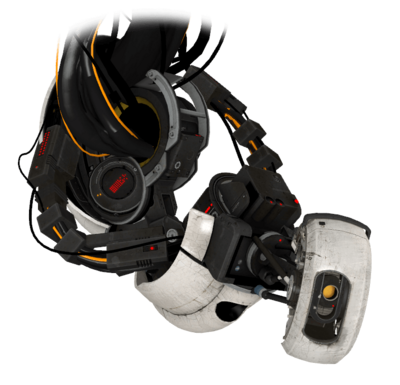
GLaDOS, one of gaming's most unusual and memorable female characters.

Although literary culture prides itself on sophistication, there is a similar issue with crude understanding of what women want and what is distinct, if anything, about women's writing. Famously, VS Naipaul last year attempted to reduce the entire scope of women's fiction to 'sentimentality, the narrow view of the world'. If this isn't a clue as to a greater problem in how we envisage women's role in literary culture, I don't know what is. Even within poetry, there is a barely-remarked-on but, in my opinion, noticeable stylistic pigeonhole that women's writing slots into. Women who write in this way (broadly: confessional, relationship-focused, formally loose) are, in my judgement, more likely to be published than women who write in any number of other ways. I would suggest that there is a subconscious, male-led selection process at work that highlights this style of poem as 'representing' women better than some of the other styles women choose to write in.

Let's address the argument that better representation of women in either medium means a drop in quality, means opting for the poorer candidate to fulfil a quota. Women make up over half the world's population. There is no scientific basis for the assumption that men are more intelligent, more creative, more individualistic or harder-working than women. If you have two local sports teams who, in totality, are equal to one another, and you make up a national side that is heavily weighted to one of those teams, as a matter of logic, you must have picked the weaker players from one team at the expense of stronger players from the other. In any culture, subculture or industry where the gender balance is skewed heavily in favour of men, the weaker candidates are already being picked. More equality should logically amount to higher quality.

Finally, I want to say a few words about Coin Opera 2: Fulminare's Revenge and our approach to gender equality. The final ratio of contributors is 23 male to 18 female, which is 57:43 in favour of men. I consider this not ideal but within the boundaries of acceptability considering our limited resources. During the process of soliciting poems, three male poets approached me with unsolicited poems, while no female poets did. At one point, I did make a concerted effort to get more female poets on board because I felt we didn't have enough. Not one female poet turned us down on the basis that she didn't play games, and the games they played ranged from pinball tables to Skyrim. Some found that the games they wanted to write about had already been covered, and so declined. One, whose relationship with games was mostly through her children, specifically bought and played the game they wanted to write about for the first time, in the interests of getting a more in-depth perspective. Some poets of both sexes said they would have a think but ultimately didn't get back to us.

I would say that, on the whole, the collection is definitely richer for its inclusion of a good number of female poets and gamers and that their work does not betray any notion that there is a strict segregation of tastes or styles between men and women. I don't think of this as providing a service to women (albeit I hope that providing a platform for more women to respond to games and gaming is helpful) but as something that improves the overall quality, accessibility and range of the book.

Further links

Coverflip: Maureen Johnson on gendered book covers
Jane McGonigal, game designer and games culture activist
Helen Lewis writing in the New Statesman on female protagonists in games

Footnotes

(1) Prior to writing this article, I'd only seen the fraud accusation made in the seething jungle of comments sections on news sites. But I only had to type 'Sarkeesian fraud' into Google to find this page in the top two results.

(2) I first stole and redeployed this metaphor here.

Tuesday, 29 January 2013

Camarade Poetry Reading: K v Ryan Van Winkle!

On Saturday 9th February, SJ Fowler presents the fourth edition of his collaboration project Camarade. 26 poets have been paired up and challenged to create something unholy incredible together. Kirsty will be joining forces with Ryan Van Winkle (investigate his book, Tomorrow We Will Live Here) on a very strange love letter.

The full line-up promises an impressive mixture of sonic, experimental, formal and free-flowing poetry. If you fancy something a little different to your average reading, get thee to Shoreditch.

Click on the flyer for more information.


Nearest tubes: Shoreditch High Street, Liverpool Street, Old Street.

Friday, 18 January 2013

Blowing on the Dice: On Competition Mentality

While we might wonder at the seeming arbitrariness of judgements in poetry competitions, the lure of winning still ensures a healthy number of entries. Upwards of 30 poetry prizes are currently active in the UK alone and in recent years publishers have begun to host competitions for whole manuscripts, the winners of which receive publication with the press and often a few hundred pounds to boot. The money for the richest poetry competitions may still be far lower than that for prose and factual writing but any cash prize is attractive, particularly for such a poorly funded artform.

And the money is simply the start. Should you be fortunate enough to win the UK's National Poetry Competition, the initial effect must feel not unlike being plucked from the poetry workhouse and given a shot at becoming a gentleman. Furthermore, when entering such competitions, which are necessarily pay-to-play, you are also reminded that in doing so you are supporting the organisers and UK poetry as a while, so even if you don't win, you can console yourself with the fact that you are supporting your artform. Everybody wins, right?

Not exactly. We can stake too much on the life-changing ‘lucky strike’, just as we can fall for the myth that Being Published will automatically mean everybody stops to notice our brilliance. The one-win-solves-all idea is very seductive, but the associated cycle of hope and disappointment can be very damaging to one's self-esteem and capacity for courage. Worse yet, focusing too much on the gold medal can cause us to make unwise, desperate moves that ultimately harm us.

I wasn't published as the result of winning a competition (that came about as a big surprise during the manuscript-mulling period), but partly because I co-ran Fuselit, which led to being invited to read when I moved to London, which led to discovering and supporting the work of others, which eventually led to my now-editor, who was the first person to give me a shot on stage, commissioning my book for Salt. Now that the book is a reality it's amazing but it's hardly been a question of "You've made it. Stop here and collect acclaim."

The alternative is to do as many excellent writers do, and throw ourselves into improving and experimenting. It’s a slower process, but it pays more satisfying and sustainable dividends. Such writers produce work with tremendous character, which influences others along the way. Many have never won a prize or placed in a major competition and nobody cares one iota.

Competitions can be a very positive thing. They do raise needed funds and provide opportunities, particularly for those writers who don’t have access to London’s bustling poetry scene. But for each contest, there are a tiny number of winners, and often only one of these winners receives a financial prize. And unless you garner a whole raft of accolades at once, that glow can fade surprisingly quickly (how many past NPC winners can you name without looking them up?).

Rather than simply reiterating the statistical unlikelihood of winning in the first place, perhaps we should simply remember that prizes guarantee nothing. There are plenty of paths to success outside the awards circuit, and any endeavour which celebrates more than one person, more than once a year, and which carries as a reward something more than a single deal or clot of money, surely offers the best odds for success.

Some martial arts schools treat the gaining of grades not as a mark of achievement but as a test. Once you have been given the belt or grade, it's up to you to work out how best to continue training and developing. Instead of thinking, “Awesome. Now I’m going to write another book”, it would be good to see more victors follow the example of one group of Foyle Young Poets and say, “Awesome. Now let’s start a magazine.”

Wednesday, 2 January 2013

An Anatomy of the Spirit (Part 1)

written by the Judge


Richard Dawkins is one of the most important and influential modern critics of religion. Most of us are familiar, even if indirectly, with his arguments in books such as The Blind Watchmaker and The God Delusion, and we know or have heard of the controversy that they generated. Dawkins derives much of his resonance from his status as a prominent scientist, rather than from his (not always original) arguments, and this is something that sets him apart from more ‘journalistic’ British atheists like the late Christopher Hitchens. It also sets him up as a natural rival to religious epistemologists, as science is frequently placed in a diametrical relation with religion: the two disciplines may be seen as incompatible and conflicting, or, more diplomatically, as two different ends of a spectrum, concerned with two different branches of knowledge. From the pope’s vocal insistence on bioethics to Einstein’s and Hawking’s famous aphorisms on God, the anecdotal literature surrounding this binary system abounds.

But there is another dualistic opposition in our culture that places science at one end and a specific discipline at the other. This is the slightly vaguer opposition of science and art. We find it encapsulated in the more general dichotomy that is manifest in our education system, that of the sciences versus the humanities. A student is normally expected to orient him/herself in the direction of one of these two, with a number of congruent modules in either of the fields. Furthermore the figure of a great artist, along with that of a great scientist, is presented to us from early childhood as pretty much the purest and noblest aspiration available in this world (not necessarily to the point that we are encouraged to become one, but at the least we are taught to admire them). More importantly, they are the only two models which subsist in a dichotomous relation. No similar bridges are raised between, say, the aspirational figure of a great athlete and that of a great businessman, or that of a great statesman and a great engineer (though these are themselves celebrated). The artist and the scientist seem intuitively related, as though linked by a thread which simultaneously aligns and opposes them to each other.

This commonality between art and religion as cultural ‘others’ to science also points to a commonality in their perceived social role. As disciplines, it is obvious that art and religion are two very different things. However, our culture has developed a way of talking about them – a unified set of clichés, myths and rhetorical figures – which are at heart identical for both. What exactly is the nature of this similarity, why does it persist, and what should be done about it?

Let us begin by exploring the first question. What are the common traits between artistic and religious discourse? What is the (linguistic) emblem that describes both of them? Or, more simply, what are we talking about, traditionally, when we say either ‘art’ or ‘religion’?

To begin with, we are talking about something that is specially recognized for its preciousness; the word we use for religion tends to be ‘holy’, whereas the word we normally use for art is ‘priceless’ (both terms have a similar function – they ban any discursive element with commercial connotations). Economic considerations do not come into it and are in fact considered vile. The real man or woman who follows or engages with this discipline is always expected to think nothing of money, but rather to be wholly dedicated to the object of his / her endeavour. This is understandable, because his / her discipline is not amenable to mathematical models and has no quantifiable dimensions; rather, it defines our society’s ethical standards and helps us find the best way to live our lives, either by teaching or simply by suggesting; it explores and sometimes explains the best path(s) towards happiness, on the strict condition that we be true to ourselves (when our ‘selves’ do not correspond or agree with the work of art or with the dominant religion, this leads to conflict and paradox – as usually explored in minority discourse). As such, it is culture’s primary source of opposition to inducted values such as consumerism or materialism, acting as a stalwart against greed and superficiality. It (supposedly) trains our sensitivity and kindness as well.

Naturally this object that we are talking about is transcendental. Perhaps more significantly, it is an end in itself. Though it benefits society as a whole in a number of ways (Dawkins has contended this bit with respect to religion), it can also be done for its own sake, and indeed is primarily approached for this reason. As a self-sufficient ‘end’, and thinking on a grander scale now, it justifies the whole of humanity. It redeems it, both individually, acting on its people one by one, and also historically. A civilisation may legitimise its course and passage over the face of the earth if it leaves us with a heritage of great art or if it greatly contributes to the spreading of the Word, which is the same thing. It can also attain the same recognition if it greatly advances science – but that’s the other end of the spectrum.

Since in both the cases of art and religion we are talking about what is essentially a discipline, it only rewards in degrees commensurate to the efforts that are put in. It is of little use if it is treated casually, or if it is only thought of in passing, once every now and then. People who handle it this way are regarded with paternal benevolence by those who take it seriously instead (but with frequent encouragements to ‘practice it’ more often, be it by coming to the prayer sessions or by reading the poems of Coleridge / Milton / Neruda...). A serious commitment to this discipline demands long hours of study, a deep acquaintance with the history and culture of your specific ‘school’, and a great deal of introspection. The implicit reward of all this is a certain happiness, of course, but also a special type of wisdom. This may loosely be referred to as ‘enlightenment’, according to its manner (and maybe suddenness) of acquisition. Emphatically, depending on the subject, we may even talk of salvation.

The general conception is this – that though the reward of the discipline is available to everyone, for it is not precluded by class, sex or race, in practice only a handful of people actually attain it. The hierarchy of success, here, is aristocratic: it is defined by a special gift known as ‘talent’ in art and as ‘piety’ in religion (the importance of piety has greatly declined since the times of the legendary saints, but so has proactive religious discourse in general – more on this later). Societies go to great lengths to celebrate individuals with this special gift, and very many of our legends are woven specifically around these people (the only discourse which compares to the spiritual one for mythopoeic power, in fact, is that of war). Therefore in this discipline we find prophets and martyrs, people who see ahead of their time and reveal to us the real nature of things, sending out messages which are then misunderstood or fearfully rejected, or people who die for their commitment to their private cause, thereby becoming instant icons, worshipped past all others, even to the point of eclipsing the real value of their work. After all, they demonstrate the transcendental value of the discipline that they upheld; for is it not worth dying for? Is it not larger than life? And is not one of the greatest tropes in this discourse precisely the separation between ‘art and life’, or between the concerns of ‘after-life and life’?

The myth of the saint, which has an extensive history from the Roman Christian era to well past the middle-ages, is re-elaborated in our present age as the myth of the artist, that precociously illuminated, infinitely sensitive, candid introvert, divorced from ordinary people by virtue of the very talents that elevate him / her above the world. This character is at the heart of such works as James Joyce’s Portrait of the Artist as a Young Man or Thomas Mann’s Tonio Kroger. Baudelaire sums up the character in the famous ending to his poem The Albatross:

The Poet is his kinsman in the clouds
Who scoffs at archers, loves a stormy day;
But on the ground, among the hooting crowds,
He cannot walk, his wings are in the way.

A step below the ‘chosen ones’, the saints and great artists, the discipline then includes a whole set of subordinates whose role is to mediate and explain: religion has priests, and art has academics and / or critics. This without mentioning the legions of novices, in schools both improvised and recognised.

Keep reading in Part Two...

Wednesday, 26 December 2012

The Next Big Thing

I’ve been tagged by the very talented Melissa Lee-Houghton to give this interview for an expanding blog project called The Next Big Thing. You can read her interview here.

The idea is I post mine and tag other writers to do the same on 2 January 2013.

Where did the idea come from for the book?
The title for Never Never Never Come Back came from the Al Stewart song 'Night Train to Munich', which adopts the voice of a senior agent instructing their colleague on an operation from which they may not return. I wanted my first collection to have the combination of paranoia and loneliness that plague the classic spy figure; distrusting everyone, under pressure to deliver something valuable without knowing why.

What genre does your book fall under?
Poetry

What actors would you choose to play the part of your characters in a movie rendition?
Many of them are actually based on films and programmes anyway - 'Supper' focuses on a scene from Soylent Green, 'Yokohama Shopping' on the anime series of the same name and 'Schoolgirl Shootout' on the tragic lighthouse blitz in Japanese thriller Battle Royale. Maybe Tilda Swinton for the metal ex-assassin in 'Roy'. I'd quite like to see Rutger Hauer play Armin Meiwes. Cillian Murphy would take on the more lovelorn, gawky characters, while the main role in 'On coming out to your parents dressed as Dracula' could only go to Sam Rockwell. I love that man.

What is the one sentence synopsis of your book?
Wheeling a broken bike through an embarrassing dream in which nobody else is naked, nobody else has forgotten their gift and everyone else knows the words to the song

How long did it take you to write the first draft of the manuscript?
Very hard to tell, though I think only one of the poems ('Splitting the ego with Mary') was more than two years old when we put NNNCB together. Most of the poems came from NaPoWriMo 2011 and 2012, which tends to dust under the corners of the brain where the weird stuff lies. The putting together and sifting of the poems took about six months with editor Roddy Lumsden.

Who or what inspired you to write this book?
Everybody is under pressure to fulfill multiple roles at once, relating to this idea of a person they're advised to become. I wanted to probe the idea of breaking down under this brick-filled rucksack, of the ludicrous rules that can quietly destroy people. Poetry, with its restrictions, concentration of language, repetitions and cycles, seemed like the best form in which to explore this.

What else about your book might pique the reader’s interest?

A good helping of robots and at least one German cannibal.

Will your book be self-published or represented by an agency?
Neither. Never Never Never Come Back was published by Salt Publishing in 2012. No agencies were harmed in the making of this book.

***

My writers to tag are:
1. Hong Kong-born poet, author of Summer Cicadas and Chinese translator Jennifer Wong
2. Leicester native, author of hydrodaktulopsychicharmonica and birdman Matt Merritt
3. Reportage poet, ukelele demon and Blake afficionado Jude Cowan Montague
4. International poetry evangelist, collaborative tinkerer and all-round alchemist SJ Fowler

Make sure you check them out on 2 January 2013!

Wednesday, 19 December 2012

Losing the Poetry in 'The Hobbit'

The Judge takes a break from the series on poetry criticism to write something of an extemporary feature article - one which, be ye warned, contains a few spoilers. (The series will be finished, worry not, probably after Christmas).


Consider this poem by JRR Tolkien:

Where now are the horse and the rider? Where is the horn that was blowing?
Where is the helm and the hauberk, and the bright hair flowing?
Where is the harp on the harpstring, and the red fire glowing?
Where is the spring and the harvest and the tall corn growing?
They have passed like rain on the mountain, like a wind in the meadow;
The days have gone down in the West behind the hills into shadow.
Who shall gather the smoke of the deadwood burning,
Or behold the flowing years from the Sea returning?
It is marked by a rending sense of melancholy and nostalgia for that which is past, and this nostalgia is expressed on many levels. Firstly, it is literally stated, as the speaker rhetorically suggests that nobody shall ‘behold the flowing years from the Sea returning’. Secondly, it is rendered in the naturalist imagery that takes over from the classical one in line three (nicely synthesised in the transition from the harp to the fire), and which stands in contrast to the industrial world in which Tolkien lived. Finally, it is implied in the choice of form and diction. Phrases like ‘Where now are the horse and the rider?’ or ‘Who shall gather the smoke’ are constructions which come straight out of classical poetry, much like the alliterative style (helm – hauberk, harp – harpstring, days – down, etc.) derives from poetry in Old English, from Beowulf onwards. Tolkien is invoking, among other past ages, the past ages of poetry.

The poem comes from the Lord of the Rings, and it encapsulates not only one of the book’s central themes, but also one of its literary merits. Central to the enduring success of Tolkien’s masterwork is the grace with which it brings together his differing interests in lyric poetry, in epic poetry (the latter expressed in his famous essay ‘The Monster and the Critics’ and, apparently, in an upcoming epic poem of his own), in philology, and of course in the novel, a form which he first touched in The Hobbit.

Peter Jackson’s An Unexpected Journey, released less than a week ago and already leading all of the charts, is the latest attempt to transpose Tolkien’s work to the big screen. Like the Lord of the Rings trilogy, it is a rather dreadful effort. Jackson’s passion for the text is unquestionable – he’s certainly researched the source material. It’s his understanding of what makes the books work, in particular their textual subtlety, or his ability to translate that into a new medium, that is lacking.

An Unexpected Journey is not as faithful to the book as the previous trilogy was. Indeed, Jackson has taken the opportunity to make an out-and-out prequel, and the differences between book and film have already been lamented. What none of the reviews I’ve read have pointed out, for some reason, is the gulf between Tolkien’s use of language and Jackson’s use of images – and this is a problem that was already sharply on display in the original filmic trilogy.

The primary difference between poetry and film is that one is linguistic whereas the other is visual. But nothing prevents these media from using words and image to produce the same effect. Jackson’s greatest failure lies precisely in reading the novels with a purely literal eye. As a consequence, he is unable to reproduce levels of subtlety such as we find in the above poem, even though he follows the diegetic rails quite accurately.


Tolkien’s prose owes much to the Gothic novel, for the good and for the bad. It is extensively descriptive, especially when it comes to the journeying, and the diction is archaic – even a bit highfalutin. While it is not always successful, the understanding that it belies remains one of beauty – and it is a type of beauty that is delicate, subtle and transient. Jackson’s imagery is entirely lacking in all of these qualities. His films are defined by blazing dawns and sunsets, shots of intricate baroque cities framed in their gigantomaniac entirety, crashing silver waterfalls with rainbows spearing through them, and endless swoops over forests, rivers and mountains. When important characters must be introduced, the image blares: the elf queen Galadriel appears in this latest film with a blinding, golden rising sun behind her as she turns in slow motion. When a dialogue is important, the visual trumpets blow again (maybe that’s where that horn is blowing after all, John): the final reconciliation between Bilbo and Thorin takes place during a sunset, and all the characters are bathed in a refulgent light. Jackson in fact has much more in common with the silver-maned George Lucas than he does with Tolkien, in style and talent both.

Is this really a failure inherent in the category – be that film, fantasy or blockbuster? Exactly thirty years ago another movie was filmed in the very same genre. It too was a fantasy epic blockbuster, though there was nothing epic about its budget. It was entitled Conan the Barbarian, and it was a film dominated by the titanic physical presence of Arnold Schwarzenegger in his prime. It wasn’t nearly as silly as people usually remember it to be, and more importantly, it had exactly what Jackson’s films are lacking: a visual style that is frequently and essentially poetic, if in a bleak and barren way. Director John Milius opens the scene of Conan’s crucifixion on the ‘tree of woe’ (see it for yourself at minute 3:57 of this video) with a wide angle, giving us a clear view not only of the tree but of the desert that surrounds it. The wide angle implies the epic breadth and scope of the story, while the monochrome desert reflects its crude simplicity; the solitary, leafless tree mirrors Conan’s sense of spiritual isolation. The frame fades out into the desert, then pans onto the hero’s ravaged physique, reinforcing the thematic connection between the two. The scene has tremendous suggestive power, and not a single word is spoken.

Compare the tree of woe with the moment in The Hobbit when Thorin rises from his own tree, the one where he has been pinned down by his enemies’ hounds. As he goes to fight his rival, he is hit and he falls. As he falls, events start rolling in slow motion. Then a track of violins starts playing. When Thorin hits the ground, the frame cuts to a close-up of a dwarf shouting ‘Nooo’, and then back to Thorin. It is such a standard form that it is almost scholastic; there is no space for imagination, sentiment or suggestion. It is as though Jackson automatically assumed that his audience was comprised of idiots, so he does not trust them with feeling or understanding anything on their own. Instead, he gives them small cues to indicate them when to feel sad, when to feel relieved, when to feel worried. Imagine Tolkien being that explicit in his poem.

There are many other flaws in Jackson’s films. The action scenes are terribly choreographed, there is an over-reliance on CGI which only Lucas is able to match and which is not very competently used (I was unable to find a single creature which looked alive, not even the simple ones like hedgehogs and birds), and the characters are mostly quite flat, including the inescapable, odious comic relief – in this case an obese dwarf, because as we all know fat people are funny. But the one thing that really crumbles the connection between these films and the original texts is simply the vulgarity of Jackson’s direction. Even when inserting the poem at the top of this article in one of his character’s monologues (one of the few fine moments in the films), the use of light is almost blinding.

For Tolkien, like for the great epic poets, the golden age is a thing of the past, necessarily and inherently irretrievable. For Jackson, the golden age is right now – and it’s getting more and more golden as the increased powers of CGI allow for brighter dawns and sunsets in higher definitions and frame-rates. Jackson certainly appreciates Tolkien’s poetry. The problem, judging by this film and the ones that came before, is that he doesn’t understand it.


Monday, 10 December 2012

Psycho Poetica gets a Telegraph mention!


Psycho Poetica, editor Simon Barraclough's multi-poet love letter to Hitchcock's classic, was mentioned in the Telegraph today, in a round-up entitled 'The best recent poetry'. That sexy, skinny volume snuggled between Poems on the Underground and Josephine Hart's Life Saving? That's us! Nice quote from Isobel Dixon's 'Trappings',


Image copyright The Telegraph, 2012.

Friday, 7 December 2012

Where Rockets Burn Through!

If you're stuck for a gift for the sci-fi fan in your life, and a slogan t-shirt isn't going to cut it, Penned in the Margins might just have the answer.

New anthology, Where Rockets Burn Through: contemporary science fiction poems from the UK, is not only beautifully designed (Sunstreaker and Wheeljack seem to think so, anyway) but also makes for a laser-firing, catsuit-sporting blast-off of a poetry mission.

Jon and I pop up a few times inside (he re-jigs Catullus into space opera while I salivate over the precious meal from Soylent Green), alongside some seriously spark-spitting other writers.

Gifting poems to those who are usually more fond of box sets than tercets may seem like a risky gambit, but editor Russell Jones has picked a rich range of moreish work that, while intriguing and substantial, won't alienate (apologies for that one) anyone coming to poetry afresh. Poetry has a knack of providing an off-kilter, probing new look at classic tropes and well-loved stories, and this is a real genre-zapper.

Where Rockets Burn Through: contemporary science fiction poems from the UK is normally £9.99 plus p&p, but until 21 December, Penned are offering 20% off,so you can snaffle it for £7.99 plus postage.