I’ve been tagged by the very talented Melissa Lee-Houghton to give this interview for an expanding blog project called The Next Big Thing. You can read her interview here.
The idea is I post mine and tag other writers to do the same on 2 January 2013.
Where did the idea come from for the book?
The title for Never Never Never Come Back came from the Al Stewart song 'Night Train to Munich', which adopts the voice of a senior agent instructing their colleague on an operation from which they may not return. I wanted my first collection to have the combination of paranoia and loneliness that plague the classic spy figure; distrusting everyone, under pressure to deliver something valuable without knowing why.
What genre does your book fall under?
Poetry
What actors would you choose to play the part of your characters in a movie rendition?
Many of them are actually based on films and programmes anyway - 'Supper' focuses on a scene from Soylent Green, 'Yokohama Shopping' on the anime series of the same name and 'Schoolgirl Shootout' on the tragic lighthouse blitz in Japanese thriller Battle Royale. Maybe Tilda Swinton for the metal ex-assassin in 'Roy'. I'd quite like to see Rutger Hauer play Armin Meiwes. Cillian Murphy would take on the more lovelorn, gawky characters, while the main role in 'On coming out to your parents dressed as Dracula' could only go to Sam Rockwell. I love that man.
What is the one sentence synopsis of your book?
Wheeling a broken bike through an embarrassing dream in which nobody else is naked, nobody else has forgotten their gift and everyone else knows the words to the song
How long did it take you to write the first draft of the manuscript?
Very hard to tell, though I think only one of the poems ('Splitting the ego with Mary') was more than two years old when we put NNNCB together. Most of the poems came from NaPoWriMo 2011 and 2012, which tends to dust under the corners of the brain where the weird stuff lies. The putting together and sifting of the poems took about six months with editor Roddy Lumsden.
Who or what inspired you to write this book?
Everybody is under pressure to fulfill multiple roles at once, relating to this idea of a person they're advised to become. I wanted to probe the idea of breaking down under this brick-filled rucksack, of the ludicrous rules that can quietly destroy people. Poetry, with its restrictions, concentration of language, repetitions and cycles, seemed like the best form in which to explore this.
What else about your book might pique the reader’s interest?
A good helping of robots and at least one German cannibal.
Will your book be self-published or represented by an agency?
Neither. Never Never Never Come Back was published by Salt Publishing in 2012. No agencies were harmed in the making of this book.
***
My writers to tag are:
1. Hong Kong-born poet, author of Summer Cicadas and Chinese translator Jennifer Wong
2. Leicester native, author of hydrodaktulopsychicharmonica and birdman Matt Merritt
3. Reportage poet, ukelele demon and Blake afficionado Jude Cowan Montague
4. International poetry evangelist, collaborative tinkerer and all-round alchemist SJ Fowler
Make sure you check them out on 2 January 2013!
Showing posts with label poets. Show all posts
Wednesday, 26 December 2012
Sunday, 16 December 2012
Sunday Review: New Scottish Poets Anthology
posted by the Judge
It's Sunday!! This means two things for me. Firstly, I'm going to be putting up our Sunday review. Secondly, I'm going to try and take a certain girl to the cinema, probably to see The Hobbit (which I expect I won't like, but I like the girl, so let's just give this thing a chance, eh?).
Regarding the review, we are dealing with the New Scottish Poets Anthology, edited by Sandra Alland. Find the review by clicking on this link. Our critic for the occasion is Harry Giles, himself a son of Scotland, whom you can see in the photo above as he meditates on the review (he doesn't look Scottish though).
Enjoy your Sunday, enjoy the review, and I'll try and enjoy The Hobbit.
Monday, 12 November 2012
Call for Writers
Like most other poetry webzines, Dr Fulminare’s Irregular
Features is run on a non-profit, voluntary basis by its staff and depends on
the passion of its reviewers to provide the high standards of articles it is
committed to deliver. Thus, our call for writers is ongoing: if you are
interested in publishing reviews or feature articles on contemporary poetry of
any kind, then we want to hear from you.
Though we are not able to pay you for your writing, we are happy
to provide review copies; if there are any collections you are particularly
keen on reviewing, we will do our best to get you a free copy of that. What
kind of writers are we looking for? A university background in the humanities
is appreciated, but we are also happy to interact with thinkers from outside
the academic institutions or with experience in different fields, especially if
they are able to refer to their experience to provide an unorthodox or fresh perspective
on poetry. Undergraduate students are welcome to apply, but should be aware
that a considerable work of revision will likely be requested of their drafts,
and some may be turned down altogether. Our purpose is to develop a consistent
critical voice, meaning that, while we will consider pitches for one-off
reviews or articles, we are mostly looking for long-term writers who are
willing to embark on a project with us and become part of our regular staff. In
exchange, we can offer a readership which includes many of the prominent artists,
editors, critics and publishers working in British poetry today, and of course
free poetry books.
We have specific standards for both our reviews and feature
articles. We will be expecting a critical approach that questions rather than
simply promotes the values inherent in both the poetry being analysed, and the
(sub)culture of poetry in general. Our writers can expect – especially for the
first few articles – a work of exchange and revision in partnership with our
editor to ensure that the site’s standards are met and that its ideological
mission is being respected.
If you think the Drfulminare project is something you would
like to be part of, and if you believe you know your poetry, then send a line
to our reviews editor at avptallarita@hotmail.com.
Briefly state who you are and what you do, and attach a sample of your critical
writing (either a review, a feature or an academic essay – no creative writing,
please).
We’ll get back to you.
The editors.
Labels:
call,
criticism,
poet,
poetry,
poets,
review,
reviewers,
submission,
submissions,
writers
Sunday, 11 November 2012
Sunday Review: Howie Good's Cryptic Endearments
posted by the Judge
Ah, Sunday, Sunday, the day when football teams clash everywhere else in Europe, when offices stay thankfully closed, and when Dr Fulminare puts up his latest review.
This week Ian Chung is looking at Howie Good's collection, Cryptic Endearments, which throws in elements of journalism, linguistics and hurtful aggression. Is the cocktail successful? Find out in the review.
Have a great Sunday!
Wednesday, 24 October 2012
Emerging Foreign Poets #2: Louise Dupré
written by the Judge.
Poetry in French, when it is not from France,
tends to receive little attention. The preponderance of the ‘real’ French
intellectual culture may have a natural way of eclipsing those around them, in
particular their numerous historical colonies in Africa, Asia and Canada. The
latter represents an interesting case-study – we are so used to thinking that
literature in English is mostly produced outside of England (just like
literature in Spanish is mostly produced outside of Spain), that Anglophone
Canadian writers have often replicated their success internationally. Names
such as those of Margaret Atwood, Michael Ondaatje or Alice Munro are familiar
to high-school students all over Europe. On the other hand, how many
Francophone Canadian writers can you name? They are so under-represented, in
fact, that I think it’s worth bending the rules a little bit for this entry in our series.
Though ‘emerging’ is not necessarily a synonym for ‘young’, I expect it may
crease a few brows to learn that today's poet was born in 1949.
After picking up Louise Dupré’s most recent poetry book Plus Haut Que Les Flammes (Higher
than the Flames), winner of the Grand Prix Quebecor du Festival
International de Poésie 2011, I have been given a taste of what her
rather obscure literary world can produce. It certainly made for an interesting
introduction. The book is not a collection but a single long poem, just topping
one hundred pages, divided in four parts. At the heart of it are a woman’s
meditations as she puts her baby to sleep, torn between the anguish and
violence of past history on one side, and the sense of hope simultaneously
afforded and demanded by the child on the other. It is a surprisingly readable
text, partly because the choice of form is such a natural free-fall: each
section is composed of a single long sentence drawing on and on, with every
brief stanza (usually two or three lines) connected by endless conjunctions. An
example will give a better idea of what it reads like, so I’ve included a small
extract from Part III, of my own translation, at the bottom of this article.
Dupré’s book
makes for a fresh reading experience from the start. There is a certain
apprehension that she may just mess it all up when she first references
Auschwitz, but the theme and question of concentration camps comes up
periodically in her poem, and eventually becomes one of the book’s central
motifs. It is handled remarkably well. The first of the book’s four parts makes
it a point of counterpoising the (hi)story of Auschwitz to the fairy tales that
she tells her child – two issues that are in turn reflected in the child’s
double nature as something extremely lovely and extremely fragile. The central
conflict in both cases seems to be that between an unacceptable history and an
indispensable future.
As the
mother puts the child to sleep in part two, and then wakes to console the child
from a nightmare, we follow the poet into a more careful construction of what
we may call an ideology of the future (or should I say a deconstruction?
It is hard to tell whether we are dealing with an architect or with a subtle
arsonist here). For brevity, we may refer to such an ideology of the future
simply as ‘the Dream,’ though this is not a term used by Dupré herself,
especially not in relation to the ever-too-wakeful mother. Her argument is led
to a solid and interesting conclusion: that the Dream, and the sentiment of
hope for the child, are necessary for the mother, and not for the child
him/herself. Without this concern for the Other, she herself cannot withstand
the burden of history. At the very least, she cannot make sense of it, as her
memory remains 'a white frame over a white background / a terrifyingly abstract
painting.'
Part III
comprises a series of meditations on the concept of pain, with emphasis on the
salvational ‘caress’ of the child. There are some gorgeous metaphors in this
section, though one is left wondering how Dupré will
close such an ambitious and momentous discussion on the relationship between
motherhood and history. Unfortunately, the ending is the only bit that is
somewhat disappointing. Dupré speaks of the ‘dance’ as the way of
salvation, the method by which we redeem our present from past and future
history. Obviously the dance is a metaphor, standing in for a type of
performative gesture, an active rather than passive way of engaging with our
history. That poetry should be an example of what the ‘dance’ represents is
suggested with a certain sleight of hand. The first three sections all open by
discussing some mysterious ‘poem’ coming to the mother from within, and the
fourth begins with the lines, ‘And you want to learn / how to dance / on the
calcinated rope / of words.’ In conclusion, then, Dupré responds
to the problem of history by means of a salvational aestheticism.
In my
opinion this paradigm is hollow. Aesthetical answers do not satisfy ethical
questions, as the first historical precedent of the Book of Job exampled as far
back as three-thousand years ago. Moreover, it misses the point that Auschwitz,
culturally speaking, represents precisely an attack on the precondition of the
aesthetic – something so brutal and intolerable that you cannot write poetry
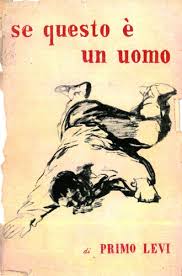
(or ‘dance’) anymore. In the words of Primo Levi (who in turn was paraphrasing
Adorno), ‘[a]fter Auschwitz there can be no more poetry, unless on Auschwitz.’
That Dupré should demonstrate little or no awareness of this historical impasse
is an important shortcoming for someone who wishes to bring the problem of the
holocaust into her meditations.
I don’t
want to overstress this type of weakness in PHQF because it’s a very common one
in contemporary poetry – like many of her peers, Dupré can point
to the problem with great lucidity, but she is less able when it comes to
showing us a solution.
All that
said, and aside from the final let-down, the execution on the whole is very
strong. The idea of projecting the timeless historical problem through the
mother-son relationship gives it a visceral and original representation, and
the choice (and use) of form is brilliant. I cannot speak for the rest of
Quebecois poetry, but this little volume is certainly one worth hunting down.
Plus Haut
Que Les Flammes, extract from Part III.
no story,
no face
your memory
is a frame
white on
white background
a
terrifyingly abstract
painting
a regret
that you
scratch with the end of the nail
down to the
blood
of words
because
words also leave
fragments
under
the skin
when the
finger touches
the
deadwood
of language
and the
ghosts that sleep there [...]
Find out who our Emerging Foreign Poet #3 is next Wednesday.
Subscribe to:
Posts (Atom)