posted by the Judge
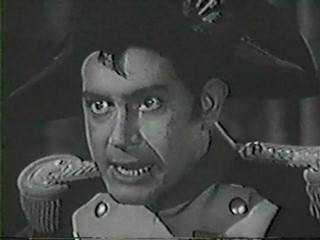
Sunday review, fellas!! And the reason Napoleon is so angry, is that this review is about Waterloo (but the one by JT Welsch, so I guess that's ok). The review was written by Anthony Adler, who makes a happy return to our virtual pages.
Even though when I hear of Waterloo I always think about this particularly inspirational speech by a luminary of Telecom.
Have a great Sunday!
Showing posts with label poet. Show all posts
Sunday, 9 December 2012
Wednesday, 28 November 2012
Approaching International Poetry in 21st Century England; Part Two
written by the Judge
The second part of our article wishes to discuss the
practical aspects of engaging with international poetry. It is dedicated to
those who entertain an aspiration to do so. Readers uninterested in putting in
the (considerable) work required to branch out of their own poetic culture are
welcome to discard it, and should be aware that this article does not wish to
pressure anyone into such a study. There is no moral or cultural obligation to
read poetry from other countries, any more than there is to read poetry itself.
It is not mandatory towards becoming a good poet or a good critic, even though
it is indispensable if one wishes to take part in the European discourse that
is coming to permeate the rest of the continent (and which is leaving England
behind). For the rest, the benefits of approaching international poetry are
your own to discover as well as to dismiss, and they can only be termed
benefits as long as they are understood as a choice, and not a requirement.
We mentioned the ‘considerable work’ that is necessary to
approach international poetry. This is almost entirely related to the process
of learning the foreign language of your choice. The challenge involved in
finding and researching the poetry is negligible; when approaching a new poetic
culture, you will invariably find that selections of local verse have already
been made for you, and good material is never too hard to put your hands on,
provided that you can access the foreign country you are studying (yes, you do
have to go there in person – most of the contemporary material has yet to be
translated, and much of it never will be).
Learning the foreign language, however, is the sine qua non of all international
poetry. Bilingualism is required even when reading translations into your
mother tongue – you must have an understanding of how another language allows
for forms of expression that are not possible in English. Lacking this
fundamental prerequisite, even finding books in translation does not help, and
will never take you past a certain superficial stage.
Thus, engaging with ‘international poetry’ should really be
understood as engaging with only one foreign culture. You may expand that number
to two or three, but in prospect, as you can only really learn one language at
a time. Any use of the expression ‘international poetry’ that is not grounded
in this dualistic exchange, and that wishes instead to discuss a global (or
otherwise polycultural) scene as a whole, is a fiction by default. Distant
poetic cultures do not interact with each other except after centuries, and
sometimes not even then (the most potent proof being that literary titans such
as Camoens, Mickiewicz or Tasso may remain not only unread but frequently even
unknown – not by the common folk, but by the poetry pundits themselves!). And
there is no such thing as a global poetry expert – to gain a working knowledge
of what is going on even in one continent is a colossal task, one made all the
more endless by the fact that smaller countries do not necessarily have
correspondingly modest poetic outputs at all (Nicaragua, for example, has a
tremendously vital scene which rivals that of other, larger Hispanic countries).
The only reasonable way to approach international poetry,
then, is to choose one foreign culture (and language) of special interest and
stick with it. This does not mean that you will forever be limited to your
initial choice, but it is the only way to start.
Since you can only begin with one language / culture, your
choice has to be carefully meditated. Countries very far away will be very
difficult but also exotic and fresh, and to people around you, you will become
an authority almost by default. Closer cultures and languages will be easier,
and you will have many peers: this means greater competition if you wish to use
your multilingual skills in criticism or publication, but also greater
opportunities for sharing and communicating. Some of them open up new doors.
Fluency in Spanish gives access to the entire South American continent bar
Brazil, Russian is a popular second language in many Eastern European nations, and
French is spoken in Canada, Africa and parts of South East Asia.
Learning a foreign language is a strange prospect. When
polyglots are faced with the need of learning a new tongue, they generally
approach it with excitement, and their initial progress can be very fast.
People who only speak one language, by contrast, often find the whole idea dispiriting,
and are slow to get into it. In reality, it is just as hard (or as easy) for
both groups. People who already speak multiple languages are only more familiar
with the process of learning, and they know that obstacles which initially
appear insurmountable (and illusions about one’s own inability or lack of
talent) require no more than a little time to be dealt with.
Learning a foreign language does not require exceptional
intelligence, and it should be an option available to anyone smart enough to
read this article. It does, however, demand strong commitment and patience. Like
learning to play a musical instrument, it is a task that takes several years,
and in which perfection can never be attained. It is almost impossible to learn
only with books, so be prepared to take periodical trips to your country of
choice. This is where the European Union becomes helpful. A return flight to a
European capital will cost you less than one hundred pounds, with no need for
visas; such a trip can be taken several times a year, over weekends if
necessary. Flying to Asian, African or American countries will be priced from
five-hundred to more than a thousand pounds, and the bureaucracy can be
demanding and limiting. Along with the difficulties inherent in exotic
languages, one understands why there are so few people who can speak Lingala or
Bali.
Tackling foreign poetry means tackling the entire culture
that produces it. You are unlikely to understand a poem that references a
Bollicao if you don’t know what that is. This is why personal trips to the
chosen country are so important, and this is also where learning a foreign
language will truly reward you. Of course being able to read Dante and
Baudelaire in the original is very nice, but the most surprising material is
normally that which does not get translated. Finding out that a country has an
entire comics culture that you knew nothing about, or a colourful underground
rap scene, or a completely different approach to sports journalism – that’s
when the language discloses itself to you, and really shows its benefits.
Hopefully, poetry will help you on this path. You may learn a language in order
to read poetry, but past a certain level the relation becomes reciprocal, and
poetry in turn starts teaching you the language, adding new words to your vocabulary,
new turns of phrase to your repertoire, and a new musicality to your cultural
ear.
Engagement with international poetry, like engagement with
poetry itself, is necessarily proactive. You must go to it, it won’t come to
you. This is one of the reasons why lamenting the absence of more translations
into English misses the point – no matter how many translations there are, you
won’t really get much out of foreign poetry if your viewpoint remains
anglocentric; if it remains rooted in the idea that things must go towards
English, and not you past that bridge. Changing this perspective may be one of
the most difficult things to do, especially for poets born in a culture that
neither demands nor encourages learning a foreign language. But it can reward
you by opening many doors you did not even know were there, and by giving
access – better, perhaps, than anything else – to the particular and
fascinating European multi-cultural discourse that defines this continent’s
historical moment. Make your own decision as to whether that’s worth the price
of admission.
Wednesday, 21 November 2012
Approaching International Poetry in 21st Century England; Part One.
written by the Judge
International poetry is a difficult topic. It is the
specialised branch of a specialised branch: since there are few people reading
poetry, it follows logically that only a very select few will read poetry from
multiple countries as well. Linguistic barriers are among the most challenging
to surmount, and the fact that England has one of the least polyglot cultures
in Europe does not exactly help. The first part of this article wishes to discuss
some of the characteristics of the current international (and especially
European) poetry scene when seen from the English perspective. It is not
intended to be an exhaustive or final article on the topic, only an
introduction to some of the issues and problems that surround it. The second
part will discuss the question of how to approach international poetry in
practice.
The political reality of our continent, to the extent that
both alliances and rivalries are now mediated by a common regulating body, has
in the last half-century increasingly come to be defined by the European Union.
Linguistically, we have therefore seen the rise of English as the union’s
official language – and this is a matter of great consequence for scholars of
poetry. Previous centuries saw intellectuals learning a foreign tongue primarily
(though of course not exclusively) for two reasons: so as to be educated in the
language of the dominant power, or else for an historical purpose. The former
case is well exemplified by the French language, which was learnt and employed
between the 18th and 19th Centuries by the English Romantics,
by the great Russian novelists and by an assortment of literary figures
(Giacomo Casanova, for example) on account of the political and cultural
influence held by France. As for the second purpose that we mentioned, it
refers to the popularity held by Latin and Greek in the continent’s educational
curricula (at certain points, Italian joined that group as well, as the
language that gave access to the great medieval authors).
Both these registers have fallen away. The language of the
dominant power is now American English, and the popularity of dead languages –
even among the educated – has been largely replaced by an unprecedented
interest in the living languages of our neighbours. Our relationship with
international poetry is now defined – even if unwittingly, unwillingly or
indirectly – by our engagement with and our understanding of a collective
European culture (the political expression of which is the European Union).
Reading Dutch poetry, for example, is the process of interpreting how its
points of convergence and divergence with your own country’s poetry reflect the
way your two cultures communicate in the context of the larger political union.
This is not a conscious decision, any more than reading French poetry was once
necessarily intended to be a response to France’s political power. It is simply
the international scenario that one is most likely to be confronted with when
reaching outside of one’s own country, regardless of whether one subsequently
chooses to embrace or resist it.
The European cultural register also defines our relationship
with poetry from outside the continent. We understand a Korean poet or poem’s
foreignness not so much to our specific country, but to European culture as a
whole – even if it makes no sense to speak of this ‘culture’ as something
unified. This is not as paradoxical as it may sound, because European culture
in the sense that we are talking about it here is not unified, but unifying. If you are indeed able to read
Dutch poetry, this will almost certainly be related to how this cultural union
has connected you. (Our argument admits to several exceptions, especially when
it comes to ex-colonies. The relationship of English readers to Indian
literature, or that of French readers to Algerian literature, has its own
special status).
In the current geopolitical context, one of the great victims
has been English culture – and, by extension, English poetry. The rise of
English as the ‘common tongue’ of the continent has excluded the British
population from the surge of enthusiasm for multilingual studies which has
filled the rest of the European soil with polyglots. The stupidity of English
officials – who have seen this process happening for decades and have done
nothing about it, even welcoming it as a blessing or a privilege – is mirrored
by the stupidity of foreign European officials. A common continental lament may
take a similar form: if the English tongue becomes dominant, then in a thousand
years nobody will be able to read the books or listen to the songs that we are
writing now, much like nobody can read some of the Gaelic or Celtic or ancient
Hispanic inscriptions in caves dating from before the Roman (and Latin)
invasion.
The oversight here is that languages do not have a half-life
of a thousand years – they change spontaneously and ineluctably and become new
systems of their own, in a process that is only bound to accelerate in the
coming age. Since this mutability is the very source of beauty in language,
there is no reason to lament it. And if you really are worried about how your
poetry will be understood in 3012 (good luck to you, by the way), then rest
assured – it will become illegible well before then, regardless of what
language you are writing it in.
As for the present situation, almost every young educated
person in non-anglophone Europe is at least bilingual, and sometimes much more
than that. This means that Europeans born outside of England have more job
opportunities and more academic outlets; they can travel to more countries,
with all the openings for new learning and experience that that entails; they have
access to more literature, music, art, journalism, criticism, ideas, as well as
an instant advantage in anything related to politics, diplomacy, trade or
tourism. The irony in all of this is that the ones who should be promoting anglocentrism are all
non-English speaking countries, while the only ones fighting against it should
be the countries in the UK. Instead it is the other way round!
British poets are but one of the categories damaged by this
development. Their burden is not only that a much greater workload is required
to gain access to foreign poetry – for learning a foreign language becomes an
enterprise, rather than a given – but the fact that they mature and develop into
a culture unaware of its own anglocentrism. Scholars and poets desiring to
branch outside the confines of their own country usually find themselves
funnelled towards American poetry, and this inevitably leads to a sort of
provincialism. As importantly, it blinds one to the realities of the European discourse
as we have sketched it in this article. The common thread that runs across the
various European nations, and which defines this moment of our cultural history,
is distinctly weaker and harder to perceive here in England. And if this does
not seem like a big deal, remember that missing out on a cultural shift is
always your own loss. The Renaissance did not stop by for Russia. Classical
music did not wait for the Americans. The mutual cultural integration of the
European Union is not going to wait for English literature, unless English
poets themselves go out and engage with it.
And this, of course, leads us to the next part of the argument: how do we approach international poetry? The second part of our article
will be dedicated to the practicalities around this question. To be published as
next week’s feature, still here on Drfulminare.com.
Sunday, 18 November 2012
Sunday Review: Rachael Boast's Sidereal
posted by the Judge
Man, I've been looking forward to this Sunday. Some weeks of work can take it out of you.
Finally, though, the time has come to lay back and relax with a cup of coffee and a poetry review. This week Judi Sutherland takes on no less than the winner of the 2011 Forward Prize for Best First Collection, that being Rachael Boast for her work in Sidereal. Find the review here and see what Judi thought about it.
Enjoy your Sunday - I know I will!
Wednesday, 14 November 2012
Emerging Foreign Poets #4: Linda Maria Baros
written by the Judge
Writing about poetry, it’s pretty hard to get travel expenses
covered. Obviously it doesn’t help when the poet you’d like to meet lives not
in another city but in another country, and seen how I’m job-hunting at the
time of writing this, my appreciation of Linda Maria Baros will have to be
written from home, sitting in my flat in Shadwell, with a glass of Coke fizzing
next to me.
That I should have opened the article with such a
perambulatory reflection reveals, I think, that I am somewhat troubled in
introducing this week’s poet. Maybe I should start with the kind of stuff you can
find out just by Googling her. To be sure, then, Baros is a Romanian-born,
Paris-based poet writing in French, thirty-one years old, currently one of the
most successful (and discussed) young voices to have attained prominence in the
competitive French scene. Her mixed cultural background may sound exotic upon
first impact, but it is not at all unusual, especially not in the present age,
and not in Europe – she is, in fact, a typical example of a translocal poet.
What makes her tough to figure out is her poetry. Baros has
no qualms in representing extreme social deprivation, painting vignettes about
homeless people or prostitutes (from this point of view, I suspect her experience
in Bucharest may have come to bear on her writing more than her years in Paris).
She also does not refrain from using visceral, disturbing imagery which could be
taken straight from a splatter movie; titles like ‘The high-schoolers rip birds
out of their rectum’ or ‘If the lintel beheads you, that’s a bad sign’ should
begin to give an idea.
Unpalatable as the imagery may be, it is executed with
superb technical confidence, and one understands why she is already famous at a
relatively tender age. In ‘The children that passed through the sifter’, my
favourite of the poems I’ve read by her, she writes a long monologue addressed
to an unnamed second person. ‘It is for
you,’ she writes, ‘that I have split
my heart in two, / like a lamb’s hoof’. She goes on to list the many things
she did ‘for you’ in a sequence of images that are as suggestive as they are
bleak:
I stole and lied, I spat blood.
I washed dead bodies
and I slept on plastic bags
filled with waste from the garbage skips
in streets that always have
a knife at hand I slept,
amid the shells of the city’s old beggars
who, in your honour, have let their beards
grow to the ankles,
like the ancient Sumerians
off to hunt lions for their loved ones.
The closing lines bring us back to the trope of the heart
with a simile that is nothing short of extraordinary:
Yes, it is for you that I have forcefully come into this
world
like a wave of blood
that no longer finds its path to the heart.
The source expression is actually subtler than I am able to
translate – the original for ‘forcefully come into’ is ‘entrée en force’, which has a formal, professional sense I could
not retain in English (it is what you say for instance of a contract as it
becomes formally effective – the date of the ‘entrée en force’ is…). But of course it also sounds like ‘entering
forcefully’, which in context has connotations of birth and rape
simultaneously. The image, and indeed the entire triplet as it works towards
the super-charged trope of the ‘heart’, is powerful and deeply layered.
So why do I say that Baros is ‘tough to figure out’? Well,
it is only that I do not understand where all of this horror comes from. As far
as I can tell from the bio snippets that I could find on the net, she is an
academic poet of the type that we so commonly find in France,
with a PhD and a great deal of work in the field of translation. Even if we
take her imagery to be a form of engagement with the realities of social
deprivation (an agenda we would commend), it is so gritty and deliberately
shocking, so uncompromisingly violent, that one feels there is more at work
than simply denunciation. Where is all this gore pouring out from?
And that’s why I wish Jon and Kirsten could cover my
flights (business class if you’re reading, fellas). Baros is a very interesting
poet, but I have the impression I’m not getting the full story, and I might not
be able to until I can meet her in person. In the meantime, those of you who
can, and who are not too squeamish to enjoy this type of verse, definitely
check her out. Salt has done me the favour of providing some translations,
so you can do that even without speaking French. I promise you, she leaves a
scar.
Monday, 12 November 2012
Call for Writers
Like most other poetry webzines, Dr Fulminare’s Irregular
Features is run on a non-profit, voluntary basis by its staff and depends on
the passion of its reviewers to provide the high standards of articles it is
committed to deliver. Thus, our call for writers is ongoing: if you are
interested in publishing reviews or feature articles on contemporary poetry of
any kind, then we want to hear from you.
Though we are not able to pay you for your writing, we are happy
to provide review copies; if there are any collections you are particularly
keen on reviewing, we will do our best to get you a free copy of that. What
kind of writers are we looking for? A university background in the humanities
is appreciated, but we are also happy to interact with thinkers from outside
the academic institutions or with experience in different fields, especially if
they are able to refer to their experience to provide an unorthodox or fresh perspective
on poetry. Undergraduate students are welcome to apply, but should be aware
that a considerable work of revision will likely be requested of their drafts,
and some may be turned down altogether. Our purpose is to develop a consistent
critical voice, meaning that, while we will consider pitches for one-off
reviews or articles, we are mostly looking for long-term writers who are
willing to embark on a project with us and become part of our regular staff. In
exchange, we can offer a readership which includes many of the prominent artists,
editors, critics and publishers working in British poetry today, and of course
free poetry books.
We have specific standards for both our reviews and feature
articles. We will be expecting a critical approach that questions rather than
simply promotes the values inherent in both the poetry being analysed, and the
(sub)culture of poetry in general. Our writers can expect – especially for the
first few articles – a work of exchange and revision in partnership with our
editor to ensure that the site’s standards are met and that its ideological
mission is being respected.
If you think the Drfulminare project is something you would
like to be part of, and if you believe you know your poetry, then send a line
to our reviews editor at avptallarita@hotmail.com.
Briefly state who you are and what you do, and attach a sample of your critical
writing (either a review, a feature or an academic essay – no creative writing,
please).
We’ll get back to you.
The editors.
Labels:
call,
criticism,
poet,
poetry,
poets,
review,
reviewers,
submission,
submissions,
writers
Sunday, 11 November 2012
Sunday Review: Howie Good's Cryptic Endearments
posted by the Judge
Ah, Sunday, Sunday, the day when football teams clash everywhere else in Europe, when offices stay thankfully closed, and when Dr Fulminare puts up his latest review.
This week Ian Chung is looking at Howie Good's collection, Cryptic Endearments, which throws in elements of journalism, linguistics and hurtful aggression. Is the cocktail successful? Find out in the review.
Have a great Sunday!
Wednesday, 7 November 2012
Emerging Foreign Poets #3: Manuel Del Barrio Donaire
written by the Judge
Published almost exactly a year ago in Spain, Alguien
que sea yo (‘Someone who may be me’) is Manuel del Barrio Donaire's second
collection, and one of the most enjoyable poetry books I've read in a good
while. It is a short little thing, made up of some seventy pages, counting
thirty-two poems. The style and the vocabulary are generally quite simple, so
it can be read in the space of a couple of days.
AQSY is utterly contemporary poetry, not only in
the sense that it distances itself from the more classical formats of the
lyric, but also in that it displays not the slightest preoccupation with its
own sense of permanence. It brims with references to brands, titles and objects
that will be out of fashion, even quaint, in the space of a couple of decades.
The starting point for this collection is the
assumption that our identity is shaped by our objects of consumption. This
allows Donaire to explore the way that said identity ends up being sucked into
the language of economic exchange that characterises those objects. As he puts
it very plainly in Dime un insecto en una planta, ‘You are what you
have, / you are what surrounds you at a distance of less than 3 metres, / the
dog you take for a walk, / that jar you purchased because it looks good on the
table, / an iron ring on the pinky, a flowery dress, / the softener you put in
the washing machine, / I mean it, / you're an Orbit packet of chewing-gums.’
The final image stresses at once identity (in the brand name), and the simultaneity
of the visceral and the artificial in the process of chewing gum.
These concerns are not particularly original in
and of themselves, but they are taken in some very interesting new directions
later in the collection. Most impressive and intriguing is the way that Donaire
places the character of the poet on the same plane as that of other fashionable
personas defined by their items of exchange. Far from being a neutral,
invisible onlooker, or even a salvational intermediary, as it is sometimes treated
in other self-reflexive verse, the ‘poet’ here is simply another slogan one can
wear. This is something that has been attempted by other contemporary poets (including
British ones), but in my experience it always trips on the same problem – the
poet’s attempt at satire always end up betraying his/her own sense of
self-importance. Donaire’s work is, I think, more genuinely self-ironic. One of
his poems describes a Spanish bar which I would have no trouble recognising in any
other European country, since it is described as ‘a refuge for young
intellectuals / like me, / everyone sits at their marble tables / drinking
coffee, whiskys, martinis with vodka, / everyone’s there with their laptops, /
their Moleskine notebooks, / with volumes, papers, cellulose, pens and Stabilo
Boss highlighters / to underline notes, / paragraphs from the Decameron, /
everyone with eyes half-closed writing something important, / something new,
the great novel of our generation.’ (El Pepe Botella, por ejemplo).
What makes this criticism especially memorable is
the sense of humour and lightness with which it is carried through. Our own Sam
Riviere makes some similar points to Donaire (the two artists are in fact surprisingly
alike – not least in that both their collections were initially serialised in
blogs), but his outlook comes across as grey and disenchanted. AQSY is
different in that there is not the slightest trace of cynicism, anger or
bitterness. I am normally wary of poets who write about poetry (I know, I know
– it’s a contentious claim), as I like verse that branches out of its own
discourse rather than falling back inside it, but this is an outstanding
exception. Donaire’s treatment of the subject fully succeeds in being satirical
rather than mythical, and it is never lost on its own irony.
The satire of the poet crosses over with the
other supporting theme in this collection – the tension between a sense of
social and individual responsibility which is nonetheless shaped by our
artificial identity, and the desire to just lay back and enjoy oneself, again,
however, by falling into commercial signs of exchange (like laying back on the
couch, smoking and playing with a Playstation). The two drives contaminate each
other as the poet sometimes ends up on the couch, writing poetry on his Macbook
Air or his G4 ibook, uncertain as to whether he is doing something worthwhile
or just acting like it. The poem Sábado,
which I have translated at the end of this article, exemplifies I hope both
this tension and the lightness of mood with which it is presented.
AQSY is a short collection not particularly broad
in its scope or ambitions, but all the more credit-worthy for that. It makes
its point with a punch and does not outstay its welcome. In contrast to other
exponents of the (rather remarkable) panorama of young Spanish poetry, Donaire
never shoots for linguistic prowess or aulic metaphors. His poems sound like
everyday speech and are always very easy to follow. In the space of a few days
of the reader’s time he makes an original and memorable statement and provides
him/her with a new outlook on the topics he chooses to treat, and in this
writer’s opinion that’s exactly what a modern poetry collection should do.
Saturday
I spend Saturday evening on the Playstation
watching Lost In Translation for the fourth or
fifth time
while I think that I should quit the bullshit
and write
I’m not entirely sure what
but write something,
a poem, anything to update my blog
so I won’t feel guilty tonight when I go out
and I step in amid the young
and I drink some beers
and women look at me as they would any other
without knowing that I
don’t waste my time watching football or formula one
because I’m
a writer goddamitt and if I want to fuck them
it’s not for the sake of fucking
but so I can write about it
and so I can be someone in life
and so I can look back
Labels:
Alguien que sea yo,
blog,
Del Barrio,
Donaire,
Manuel,
poet,
poetry,
Riviere,
Spain,
Spanish
Wednesday, 24 October 2012
Emerging Foreign Poets #2: Louise Dupré
written by the Judge.
Poetry in French, when it is not from France,
tends to receive little attention. The preponderance of the ‘real’ French
intellectual culture may have a natural way of eclipsing those around them, in
particular their numerous historical colonies in Africa, Asia and Canada. The
latter represents an interesting case-study – we are so used to thinking that
literature in English is mostly produced outside of England (just like
literature in Spanish is mostly produced outside of Spain), that Anglophone
Canadian writers have often replicated their success internationally. Names
such as those of Margaret Atwood, Michael Ondaatje or Alice Munro are familiar
to high-school students all over Europe. On the other hand, how many
Francophone Canadian writers can you name? They are so under-represented, in
fact, that I think it’s worth bending the rules a little bit for this entry in our series.
Though ‘emerging’ is not necessarily a synonym for ‘young’, I expect it may
crease a few brows to learn that today's poet was born in 1949.
After picking up Louise Dupré’s most recent poetry book Plus Haut Que Les Flammes (Higher
than the Flames), winner of the Grand Prix Quebecor du Festival
International de Poésie 2011, I have been given a taste of what her
rather obscure literary world can produce. It certainly made for an interesting
introduction. The book is not a collection but a single long poem, just topping
one hundred pages, divided in four parts. At the heart of it are a woman’s
meditations as she puts her baby to sleep, torn between the anguish and
violence of past history on one side, and the sense of hope simultaneously
afforded and demanded by the child on the other. It is a surprisingly readable
text, partly because the choice of form is such a natural free-fall: each
section is composed of a single long sentence drawing on and on, with every
brief stanza (usually two or three lines) connected by endless conjunctions. An
example will give a better idea of what it reads like, so I’ve included a small
extract from Part III, of my own translation, at the bottom of this article.
Dupré’s book
makes for a fresh reading experience from the start. There is a certain
apprehension that she may just mess it all up when she first references
Auschwitz, but the theme and question of concentration camps comes up
periodically in her poem, and eventually becomes one of the book’s central
motifs. It is handled remarkably well. The first of the book’s four parts makes
it a point of counterpoising the (hi)story of Auschwitz to the fairy tales that
she tells her child – two issues that are in turn reflected in the child’s
double nature as something extremely lovely and extremely fragile. The central
conflict in both cases seems to be that between an unacceptable history and an
indispensable future.
As the
mother puts the child to sleep in part two, and then wakes to console the child
from a nightmare, we follow the poet into a more careful construction of what
we may call an ideology of the future (or should I say a deconstruction?
It is hard to tell whether we are dealing with an architect or with a subtle
arsonist here). For brevity, we may refer to such an ideology of the future
simply as ‘the Dream,’ though this is not a term used by Dupré herself,
especially not in relation to the ever-too-wakeful mother. Her argument is led
to a solid and interesting conclusion: that the Dream, and the sentiment of
hope for the child, are necessary for the mother, and not for the child
him/herself. Without this concern for the Other, she herself cannot withstand
the burden of history. At the very least, she cannot make sense of it, as her
memory remains 'a white frame over a white background / a terrifyingly abstract
painting.'
Part III
comprises a series of meditations on the concept of pain, with emphasis on the
salvational ‘caress’ of the child. There are some gorgeous metaphors in this
section, though one is left wondering how Dupré will
close such an ambitious and momentous discussion on the relationship between
motherhood and history. Unfortunately, the ending is the only bit that is
somewhat disappointing. Dupré speaks of the ‘dance’ as the way of
salvation, the method by which we redeem our present from past and future
history. Obviously the dance is a metaphor, standing in for a type of
performative gesture, an active rather than passive way of engaging with our
history. That poetry should be an example of what the ‘dance’ represents is
suggested with a certain sleight of hand. The first three sections all open by
discussing some mysterious ‘poem’ coming to the mother from within, and the
fourth begins with the lines, ‘And you want to learn / how to dance / on the
calcinated rope / of words.’ In conclusion, then, Dupré responds
to the problem of history by means of a salvational aestheticism.
In my
opinion this paradigm is hollow. Aesthetical answers do not satisfy ethical
questions, as the first historical precedent of the Book of Job exampled as far
back as three-thousand years ago. Moreover, it misses the point that Auschwitz,
culturally speaking, represents precisely an attack on the precondition of the
aesthetic – something so brutal and intolerable that you cannot write poetry
(or ‘dance’) anymore. In the words of Primo Levi (who in turn was paraphrasing
Adorno), ‘[a]fter Auschwitz there can be no more poetry, unless on Auschwitz.’
That Dupré should demonstrate little or no awareness of this historical impasse
is an important shortcoming for someone who wishes to bring the problem of the
holocaust into her meditations.
I don’t
want to overstress this type of weakness in PHQF because it’s a very common one
in contemporary poetry – like many of her peers, Dupré can point
to the problem with great lucidity, but she is less able when it comes to
showing us a solution.
All that
said, and aside from the final let-down, the execution on the whole is very
strong. The idea of projecting the timeless historical problem through the
mother-son relationship gives it a visceral and original representation, and
the choice (and use) of form is brilliant. I cannot speak for the rest of
Quebecois poetry, but this little volume is certainly one worth hunting down.
Plus Haut
Que Les Flammes, extract from Part III.
no story,
no face
your memory
is a frame
white on
white background
a
terrifyingly abstract
painting
a regret
that you
scratch with the end of the nail
down to the
blood
of words
because
words also leave
fragments
under
the skin
when the
finger touches
the
deadwood
of language
and the
ghosts that sleep there [...]
Find out who our Emerging Foreign Poet #3 is next Wednesday.
Sunday, 21 October 2012
Sunday Review: Idra Novey's Exit, Civilian
posted by the Judge
This Sunday, Rowyda Amin reviews Exit, Civilian, by Idra Novey, selected for the National Poetry Series in the US of A. You can find the review here. An entire collection dedicated to the American prison system - you don't get poetry much more socially engaged than this.
Have a great Sunday!
This Sunday, Rowyda Amin reviews Exit, Civilian, by Idra Novey, selected for the National Poetry Series in the US of A. You can find the review here. An entire collection dedicated to the American prison system - you don't get poetry much more socially engaged than this.
Have a great Sunday!
Tuesday, 16 October 2012
Emerging Foreign Poets #1: Marianna Geyde
The first in a series of articles in which the Judge discusses some of the most interesting young poets writing in languages other than English. Today's candidate comes from Russia.
Born in Moscow in 1980, Marianna Geyde is yet
another entry in the apparently endless list of precocious Russian writers,
from Irina Denezhkina to Alina Vituchnovskaja. I'm going to introduce her by
turning straight to the opening of one of her poems. It has no title, and the
translation is my own:
may my hand be crumbled, like Sunday bread,
in twelve and two phalanxes, ordered
five by five with shields carved from bone,
and may all remain this way, until peace comes
and
my bread once more turns into my hand.
I've singled out this stanza because it
demonstrates, I think, the biblical economy of her language. When I say
'biblical,' I am not referring to the taste of her imagery (or, not just).
It's easy to say that the first and last line recall Christ's miraculous
crumbling of the bread-loaves, reversing the roles of hand and bread (and by
extension, agent and object). It's also obvious that the line 'and may all
remain this way, until peace comes' is alike to biblical verse in both syntax
and style, including the opening with the conjunction 'and.' What I mean, over
and above all of this, is her ability to charge very simple words with profound
symbolic meaning, and then sustain that charge throughout.
The resonance between the first and last line,
which seem to attract and repel each other magnetically, containing the rest of
the stanza within their field, leaves room for a great deal of interpretation.
The 'hand' is metonymic for the poet's agency, and the mutation into 'Sunday
bread' (meaning festive bread) suggests the same agency's surrender into a
sacred order which is at once religious, cultural, and historical (even
domestic, as bread has special connotations of hospitality in Russia). The term
'Sunday' recalls Christian traditions (mass, for instance), but it also has
teleological implications as the last day of the week, and thus the last step
of the cycle. So surrendering the 'hand' into the bread of Sunday may refer to
the hand's ultimate destination - the agent (and its actions) ending their journey
in sublimation with an historical identity. Read this way, the extract is
biblical even without being Christian (there are, note well, no explicit
references to Christianity anywhere in the poem), in the sense that its choice
of words suggests great richness of meaning without imposing any specific
reading on the receptor. In fact, the whole point of the term 'bread' may be
its polyfunctionality, turning the mysterious, alchemic last stanza (with the
return to the concept of the cycle), into an equally sophisticated open end.
The bread is turned back into the hand (or at least takes its role, as
the word притворится means to transform but also to pretend, to act), returning
harmony between agent and object, poet and Christ, present and myth. I shall
refrain from bringing the whole central part of the stanza (much less the whole
poem) into the discussion as well, but hopefully the brightness and conceptual
fertility of Geyde's work has been aptly exposed.
Geyde is not, of course, the only artist to
deploy this type of intertextual sensitivity. Even restraining our search to
her own country we find other poets engaging with mytho-theological themes
(Olga Grebennikova, for example). But she is the only one I have encountered
who can execute it with such technical simplicity. The stanza above includes no
erudite references to saints or historical events or past writers, of the type
we so commonly find in modern and contemporary poetry. There is no recondite
vocabulary at all. And the turn of phrase is a simple one, which lends itself
to being followed serenely.
To be clear, I am not suggesting that she is in
any way bland, or unwilling to play games with words - the two lines
immediately following our extract are as follows:
you, palm-tree branch on the palm,
palm on the palm and palm-tree branch,
Here the playfulness of the verse doesn't cloud
the symbolic richness (again) of the words themselves. The lines suggest a sort
of subjectivity falling into itself, as the palm holds itself and also the
'branching' of itself, and then turns back into the branch. This convolution is
staged in a relationship between flesh and plant which seems to involve the
idea of nature, even while suggesting that nature may itself be a construct
held in the 'palm.' It is also expressed rather musically, though this aspect
of the verse goes beyond my powers of translation.
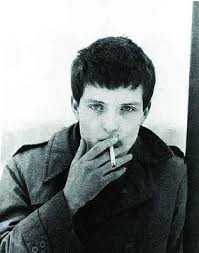
Having introduced Geyde's verse in this article,
I feel I should add - on the run - a note on another poet. Readers who are a
little familiar with contemporary Russian poetry may ask themselves why, when
choosing to introduce a representative from that country, I should have turned
to Marianna Geyde when the most obvious choice is Boris Ryzhy. The latter, born
in 1974, was a geophysicist from the Urals, apparently even a member of a
number of geological expeditions to the North. Published in magazines by the
age of twenty, he hung himself at twenty-seven and left behind a disordered
collection of brilliant, candid and utterly heart-breaking poems. His
reputation as one of Russia's greatest contemporary poets is already
considerable.
The reason I chose to write about someone other
than Ryzhy is that he probably doesn't need it - a film about his life has
already been made, and his legend seems to be growing every year. If a
selection of his work were to appear in English within the next decade, I would
be the last to be surprised. Marianna Geyde, on the other hand, is a young poet
of extraordinary promise who could remain anonymous for many decades if no-one
takes the bother to research her (and possibly translate her works). And while
Ryzhy's verse is poignant precisely because it is relatively straightforward,
Geyde instead develops this dense apocalyptic symbolism along the lines of
Blake or Rimbaud that could provoke endless readings and debates. The only
cause of complaint, really, is that her work is so infuriatingly difficult to
find. Of the half-dozen poems that I have managed to put my hands on, none
suggests that her oeuvre as a whole may be weaker than that selection, but that
can only be ascertained if someone translates her books of verse, and maybe
bothers to publish them in the UK. Anyone willing to give it a go?
Find out who our Emerging Foreign Poet #2 is going to be next Wednesday.
Labels:
Boris,
Denezhkina,
Emerging,
Foreign,
Geyde,
Marianna,
poem,
poems,
poet,
poets poetry,
Russia,
Russian,
Ryzhy,
Vituchnovskaja
Subscribe to:
Posts (Atom)